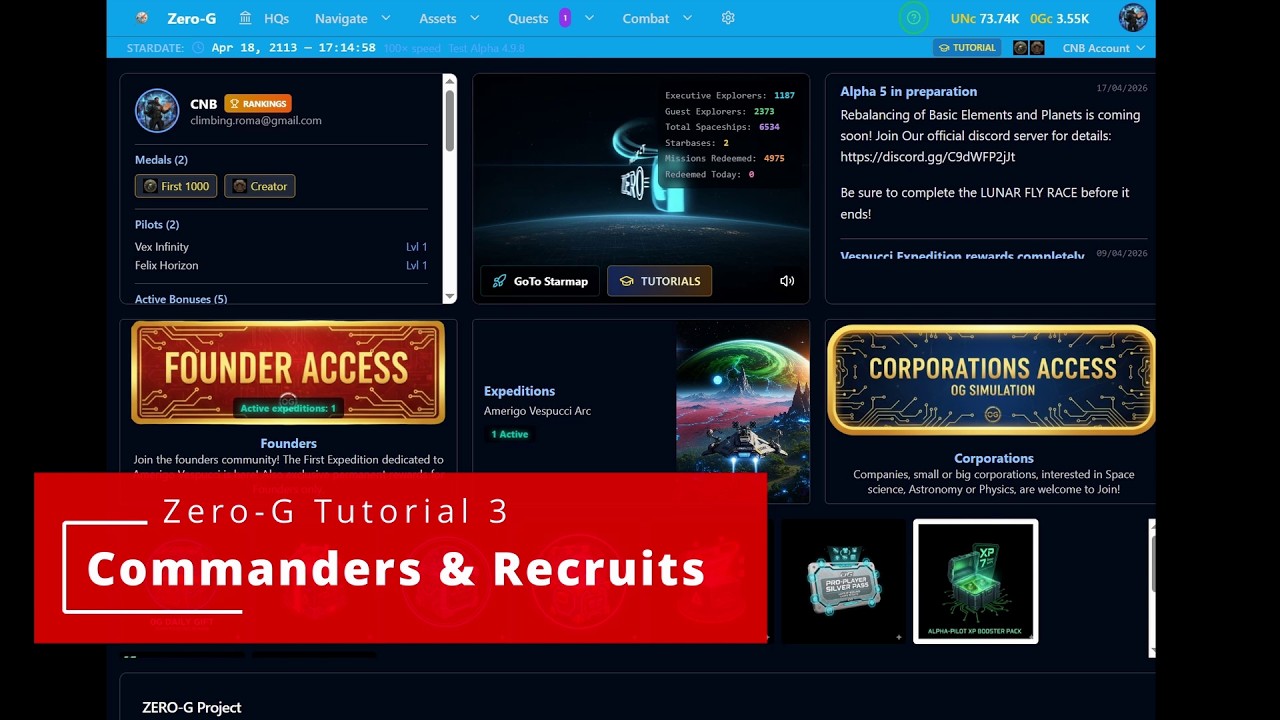
A free, hard-science MMO set in a 1:1 scale Solar System built from NASA data. Newtonian flight, a player-run industrial economy, and a persistent universe that never resets — running in a browser tab, with nothing to download.
Figures as of 2 September 2026. Missions flown grew roughly 15% during the eight days of the first Bulwark Order expedition.
Copy any of these directly. No attribution required.
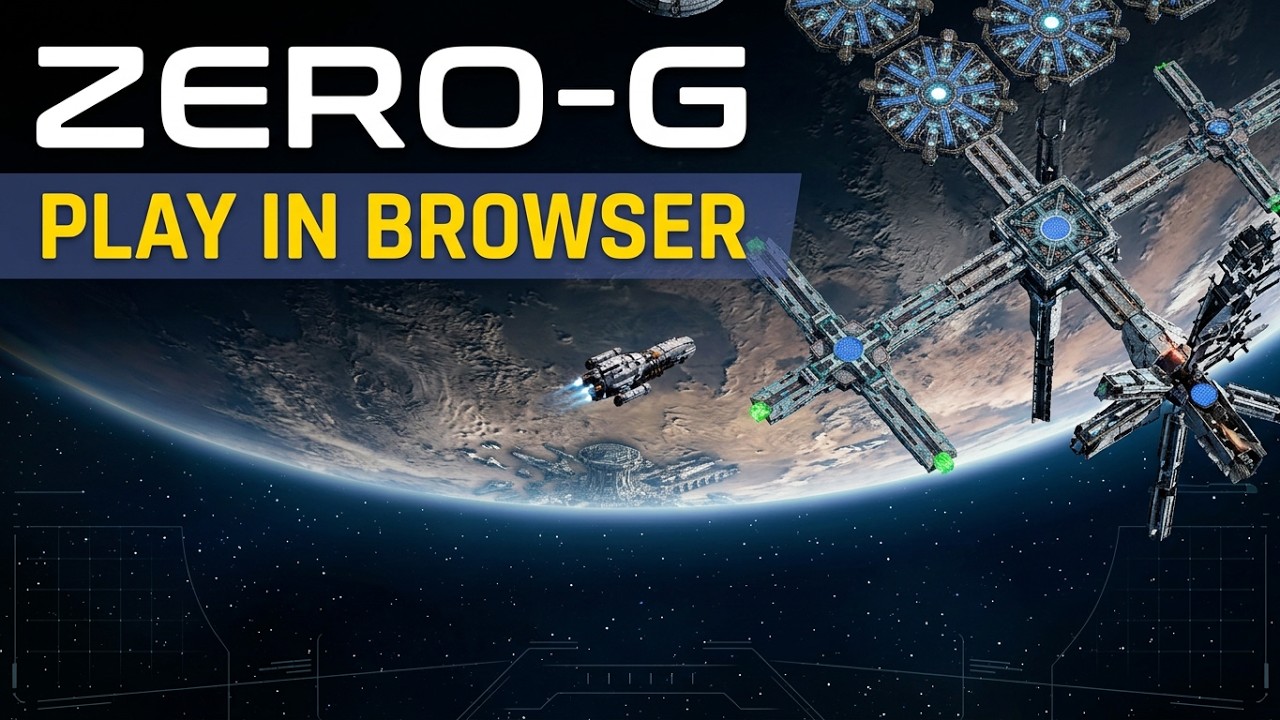
Zero-G is a free hard-science MMO set in a 1:1 scale Solar System built from NASA data — and it runs in a browser tab.
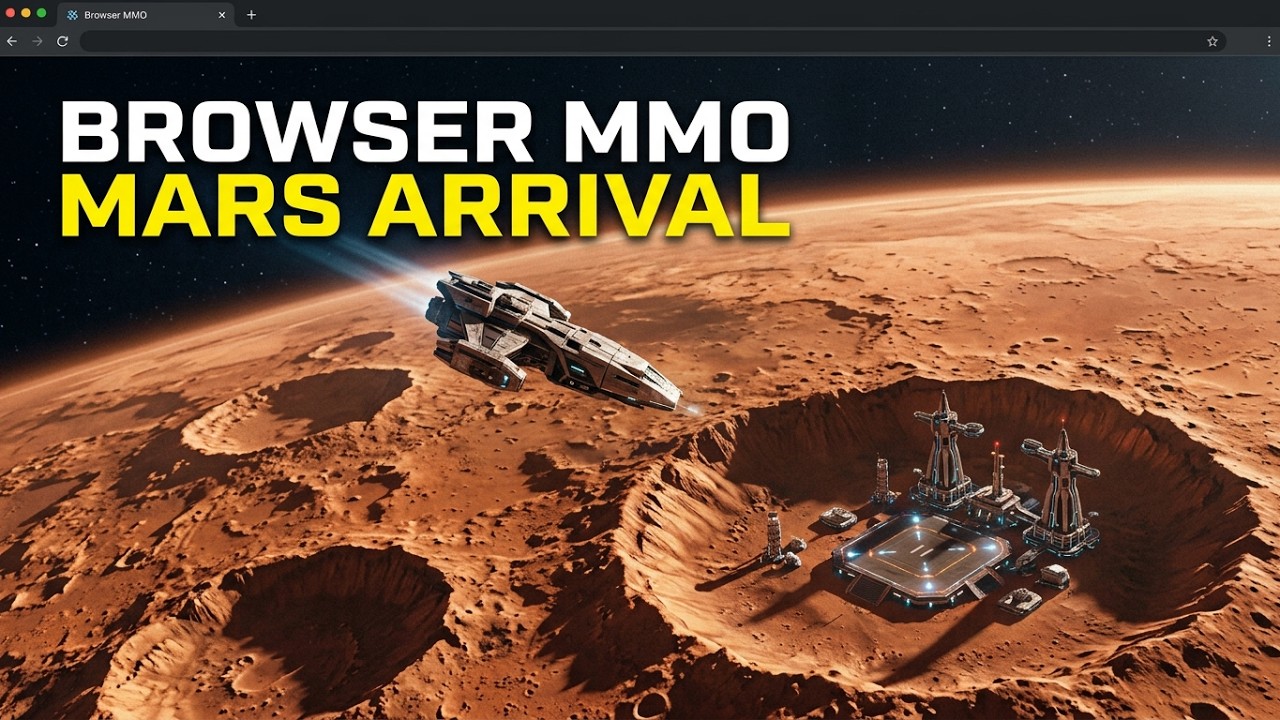
Zero-G is a free browser MMO built on a 1:1 scale Solar System generated from real NASA data. Ships fly under Newtonian physics with relativistic effects, players mine asteroids by hand, refine the ore and synthesise components, and the universe persists 24/7 without ever resetting. It is co-operative by design, with no PvP. There is nothing to download and no client to install.
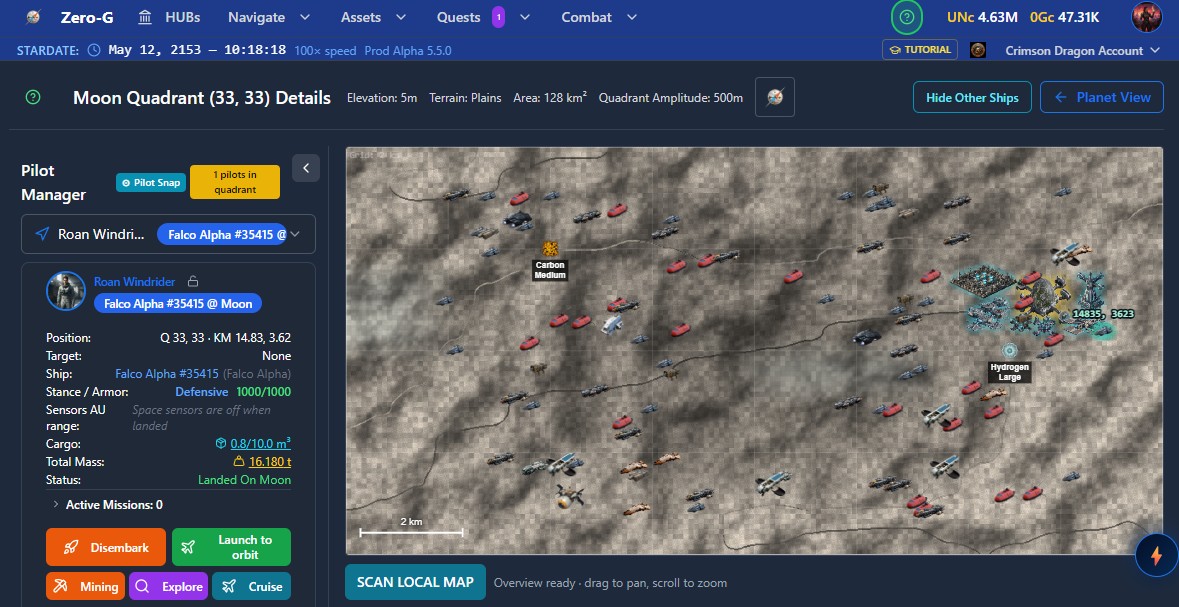
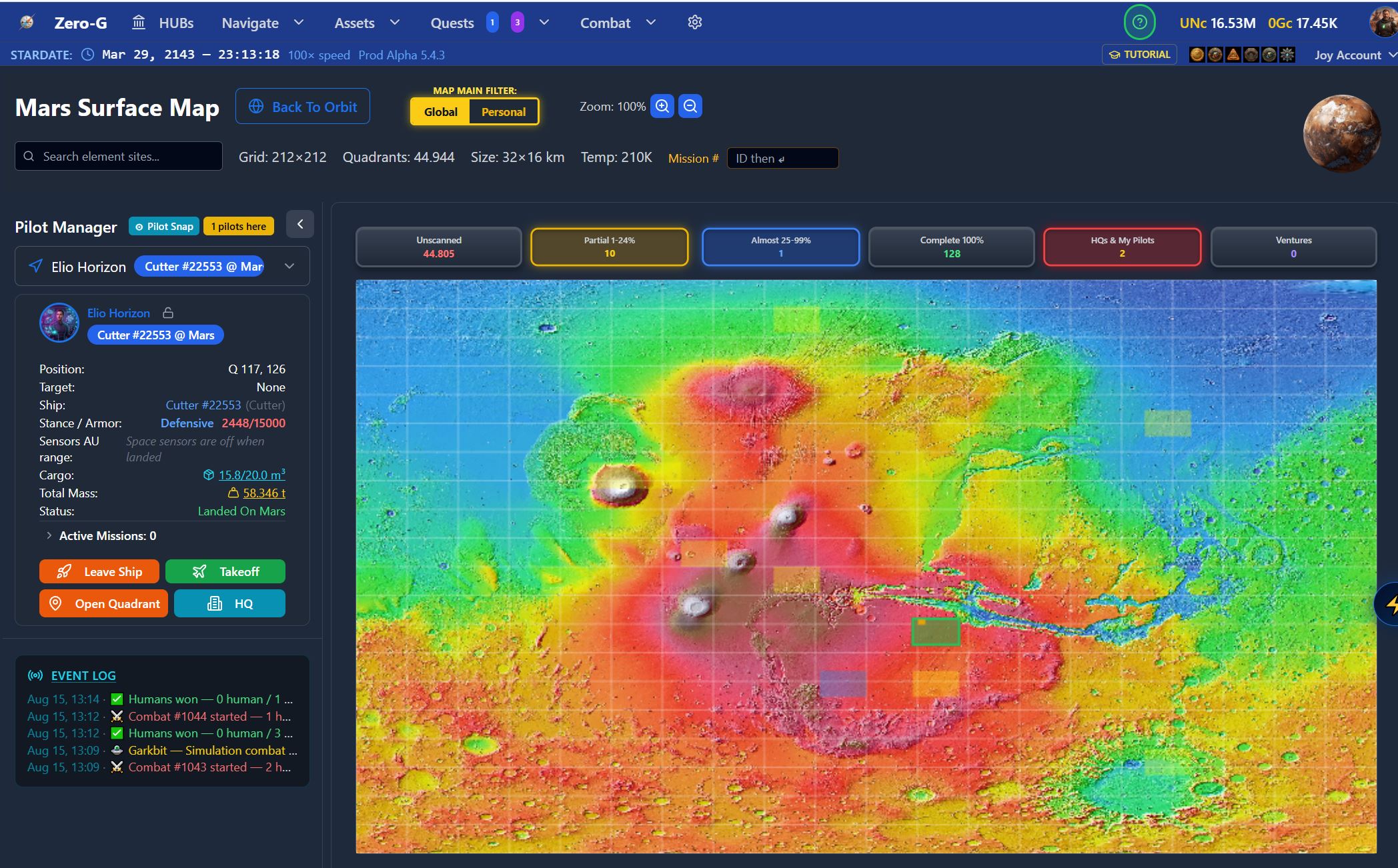
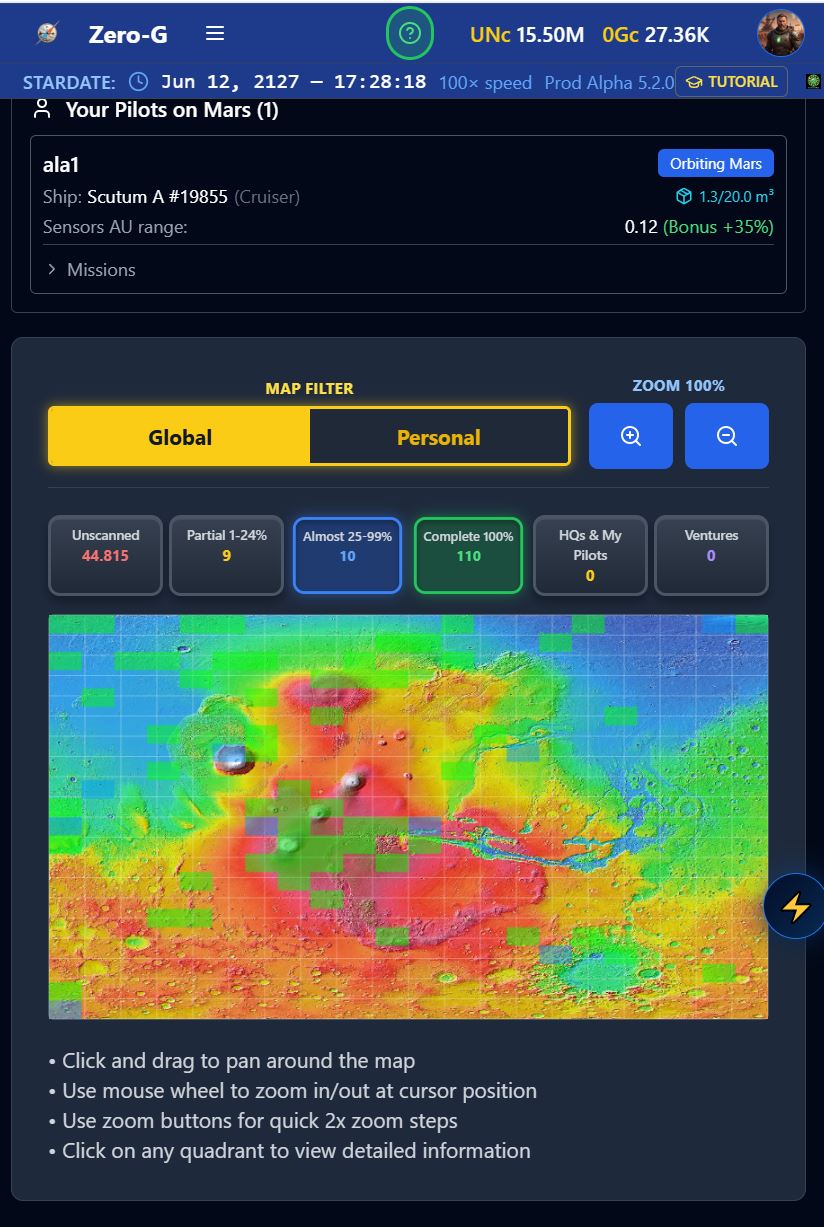
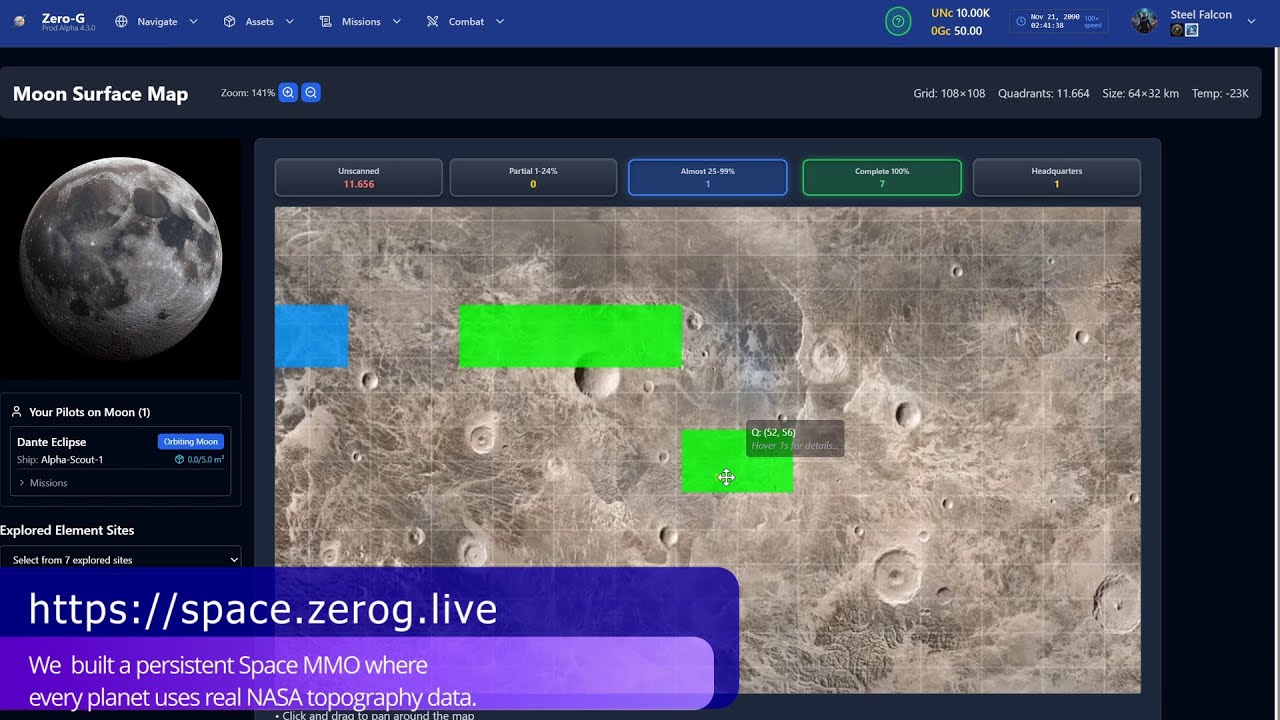
Zero-G is a free, persistent, hard-science MMO that runs entirely in a web browser. Its Solar System is built at 1:1 scale from real NASA data — lunar and martian surfaces are rendered from LOLA and MOLA topographic sets — ships move under Newtonian physics with relativistic effects, and every location a player visits is a real place they have to physically fly to. In-game time runs at 100× real time, which is what makes a crossing of the Solar System fit inside a play session. It is built in-house on HTML5, WebGL, Three.js and Node.js, as a single persistent shard.
The game's core is a player-run industrial chain. Pilots hand-fly through asteroid fields with collision physics to mine raw ore, refine that ore into elements using real chemistry and material science, and synthesize those elements into components — or sell them through a player-driven Auction House. Those three stages are live today; the chain closes at the end of Alpha 5, when players will be able to build complex items up to a complete starship or a starbase module.
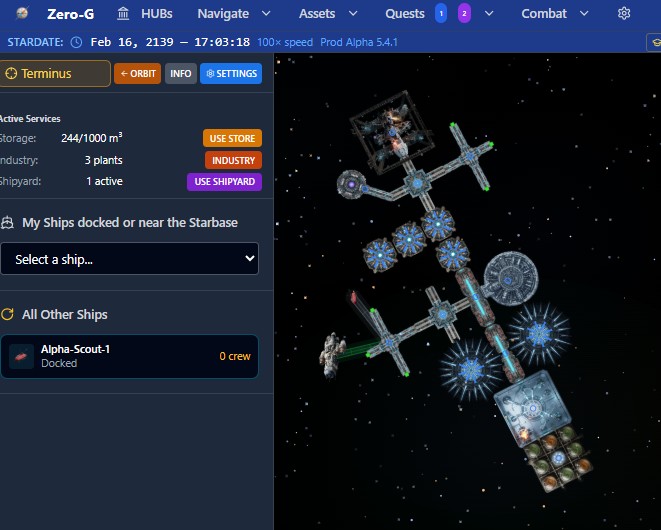
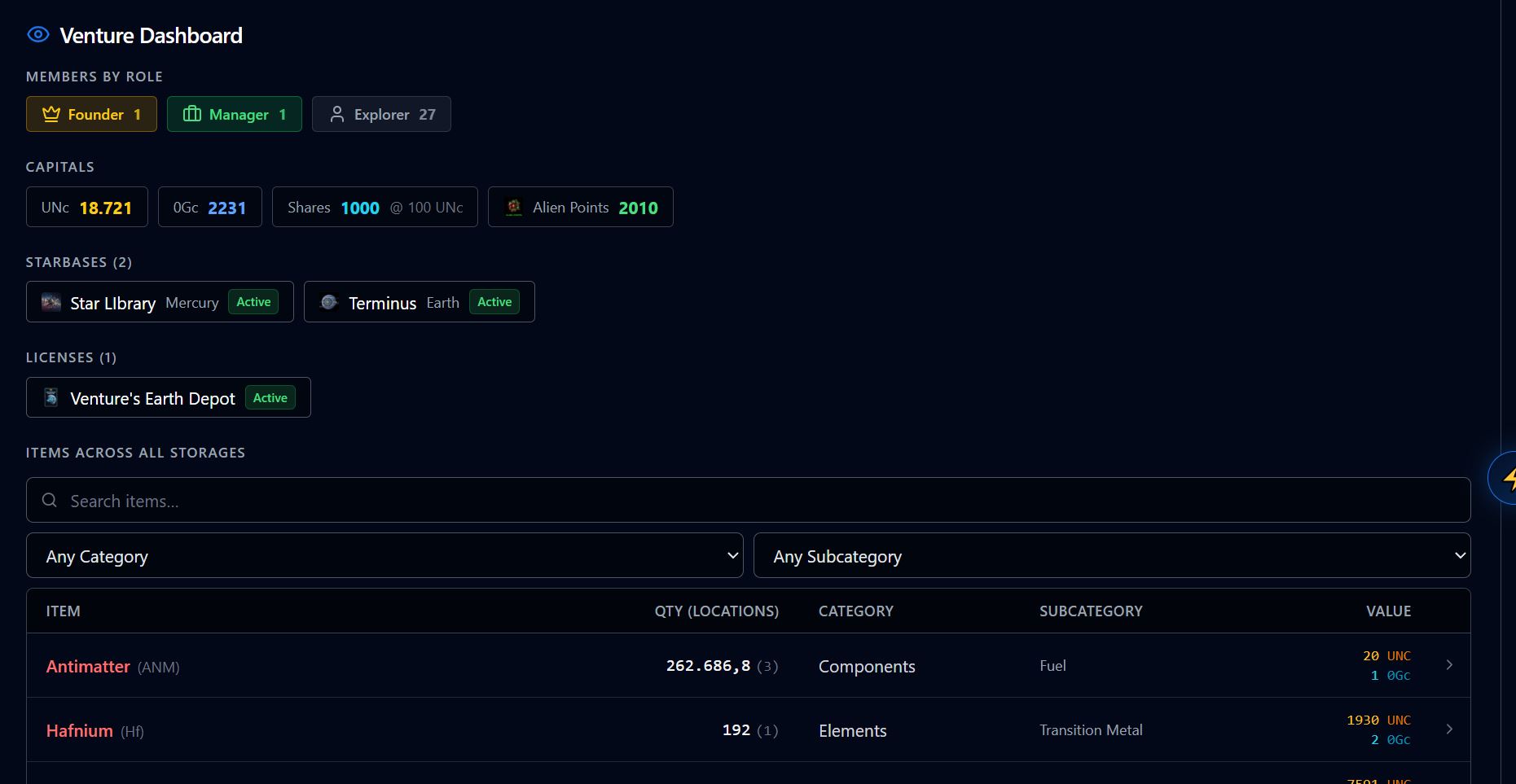
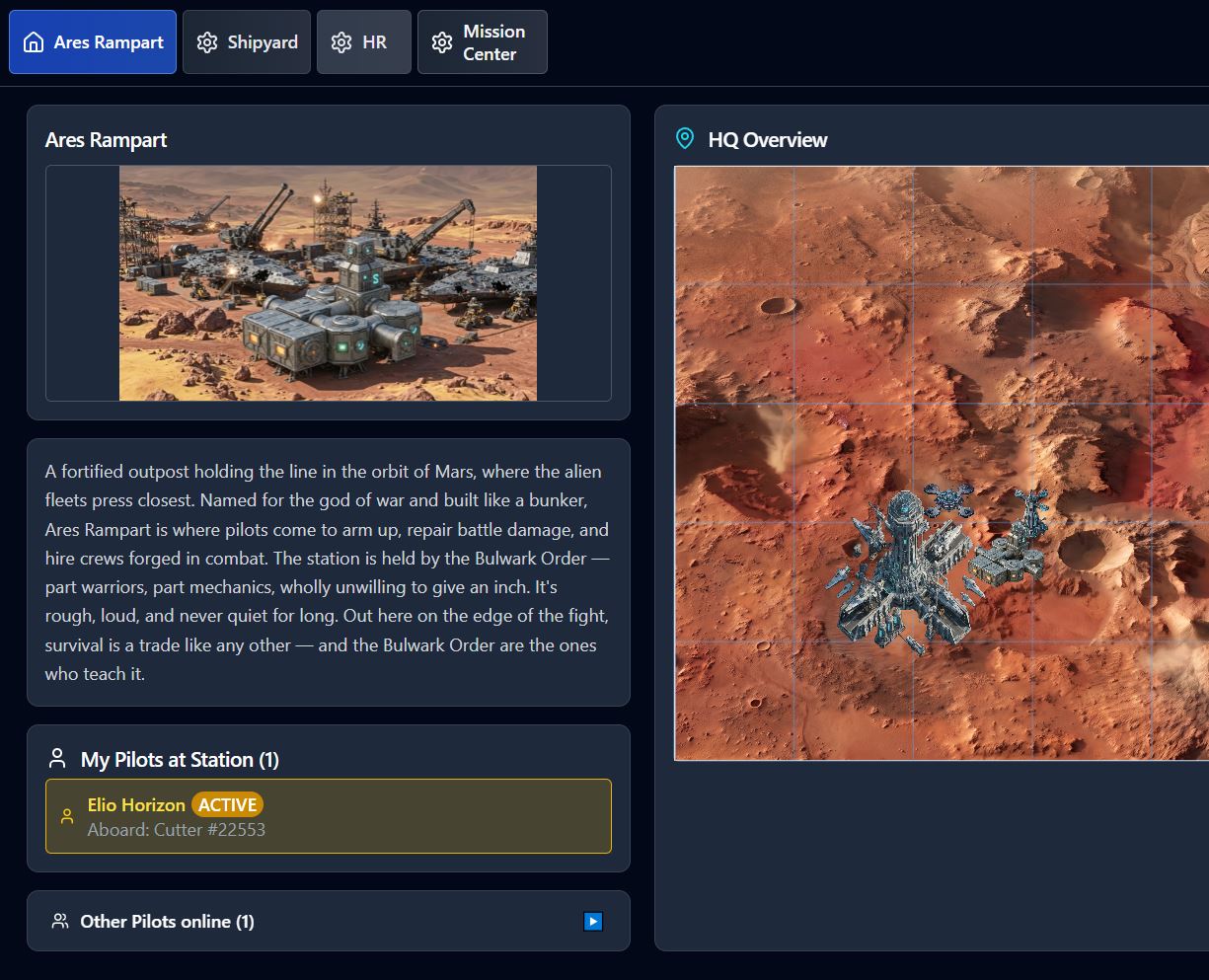
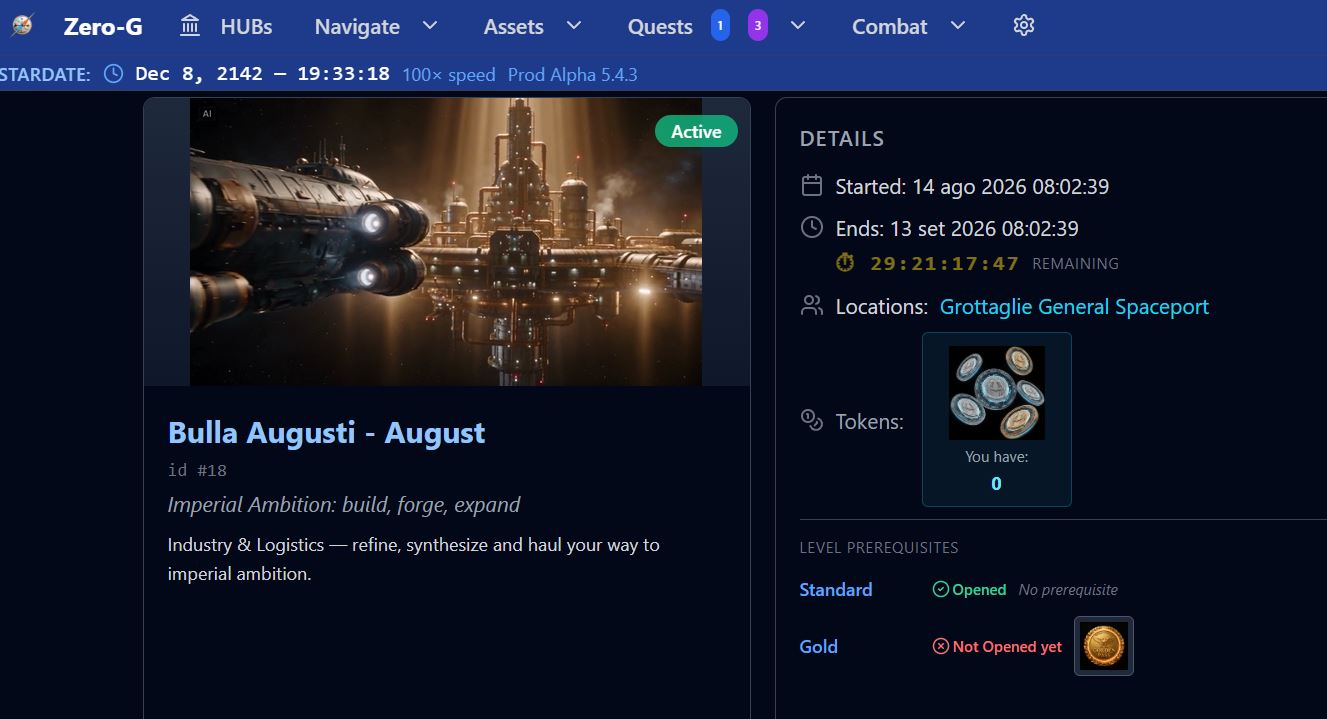
Players recruit and train specialist pilots, form Ventures that pool their effort into shared starbases, run faction missions and take part in monthly expeditions. There is no PvP: the enemy is the aliens, not the pilot next to you. The universe runs 24/7 and never resets — an asteroid mined last month is still mined.
The setting is the year 2264. After wars, pandemics and climate collapse, the peoples of Earth set their disputes aside and united behind the one goal that could give humanity a future: faster-than-light travel. The project was named Zero-G. Exploring the Solar System, humanity found unmistakable traces of ancient alien artefacts — some of them still active. Zero-G is built part-time in Rome by three engineers who were part of the team behind Lumen et Umbra, the first Italian MUD on the internet, in the 1990s. It has been in open alpha since January 2026.
The year is 2264.
After wars, pandemics, climate change and crises of every other kind, the peoples of Earth set aside their disputes and united behind the one goal that could solve everything and give humanity a future: faster-than-light travel.
The project was named Zero-G. The game takes its name from it.
The undertaking is enormous, and humanity is only at the first stages of exploring — and perhaps colonising — the Solar System. Scientific research on Earth has been driven forward in every field that might contribute. And with the first ships capable of carrying crews to other planets came a discovery nobody had planned for: we are not alone.
The traces of ancient artefacts of alien origin are incontrovertible, and some of them still appear to be active. Studying them is accelerating human science further still — and may prove to be the key to the Zero-G project itself.
The player is one of the pilots of that programme.
Open a tab and you are flying in about thirty seconds. It runs on old laptops and on phones. There is no client, no launcher, no patcher and no key to redeem.
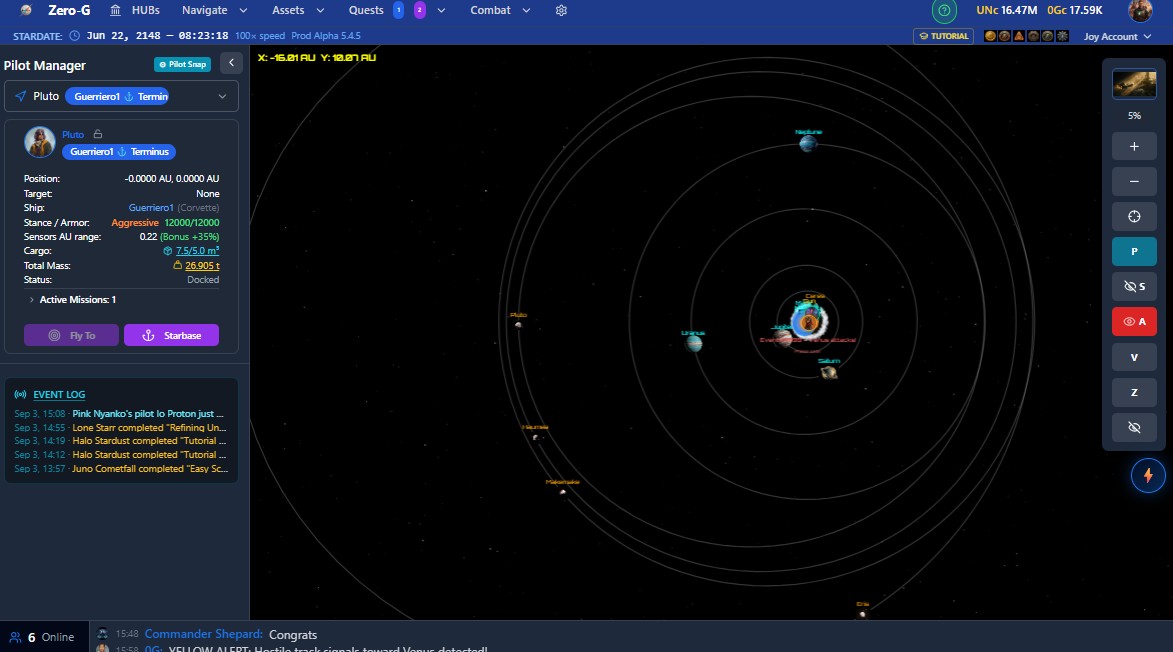
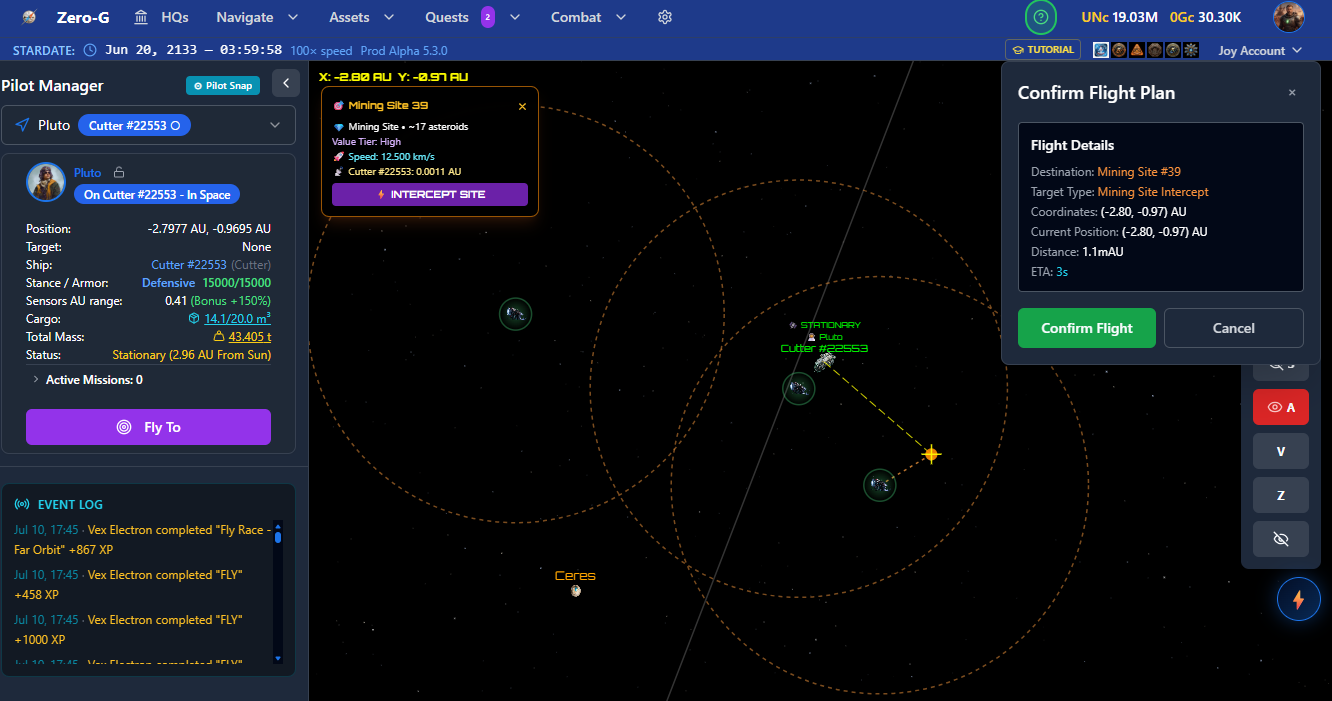
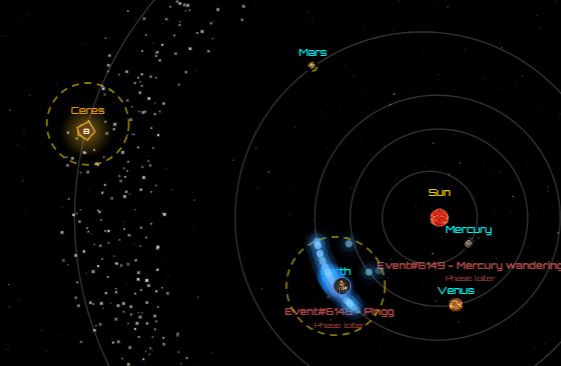
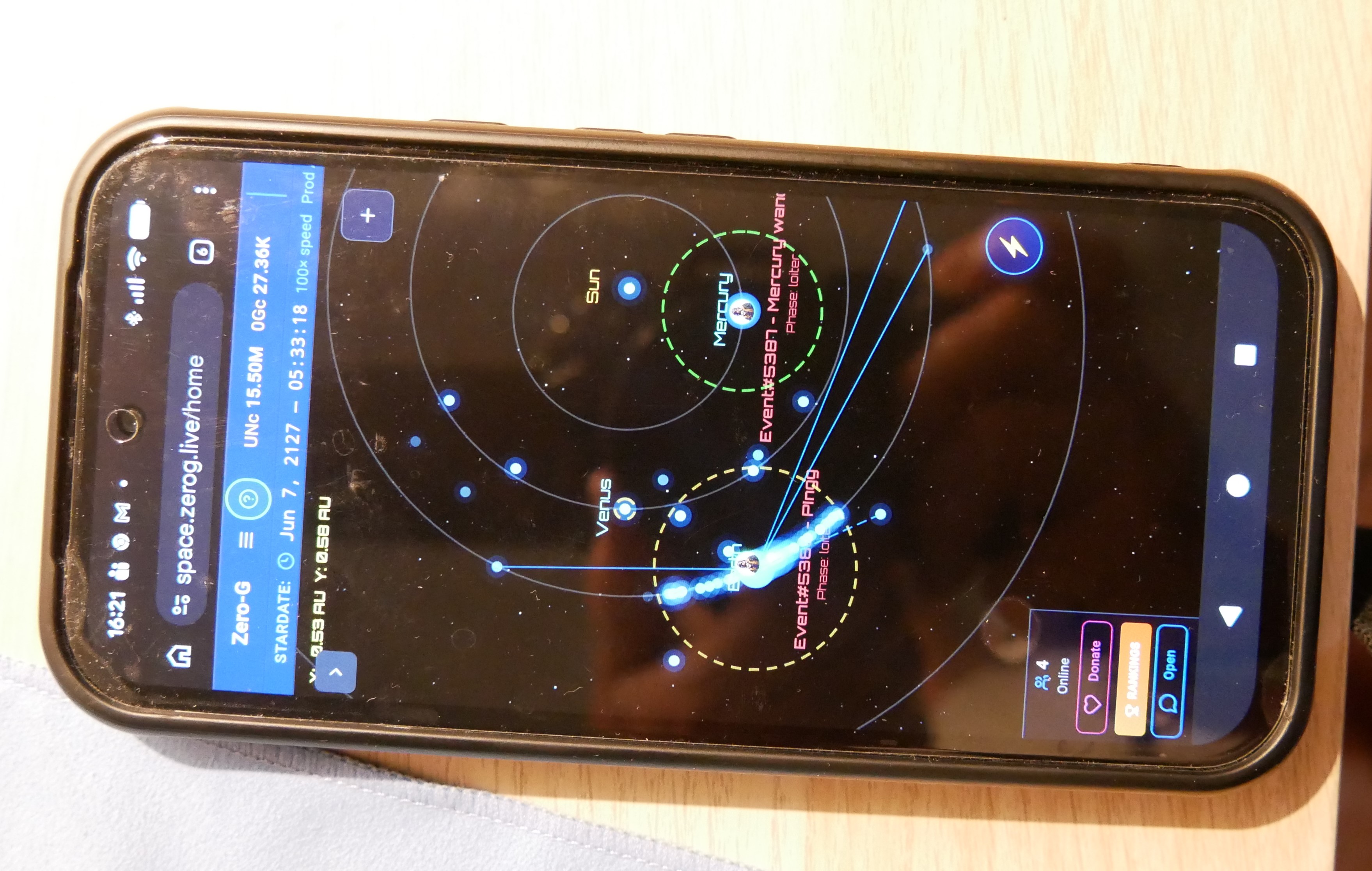
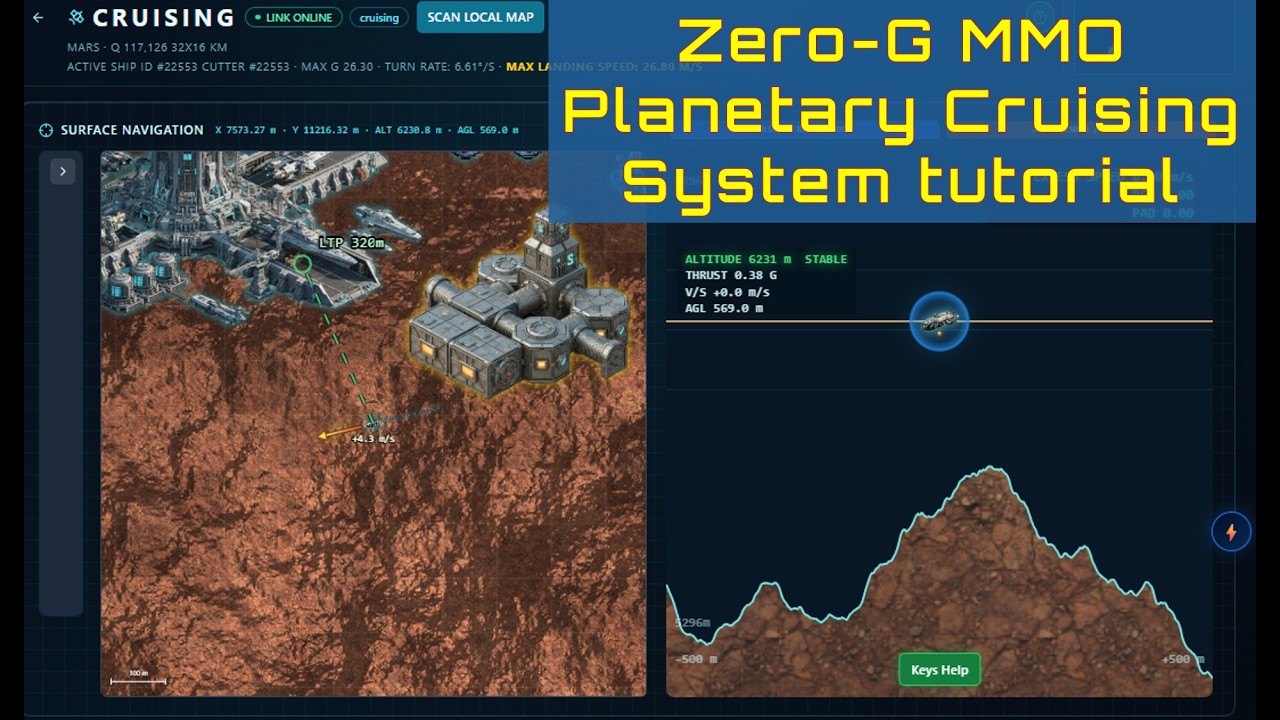
Planets, moons and orbits are generated at 1:1 scale from NASA data. Orbital mechanics are simulated, not faked — travel time is a real cost you plan around.
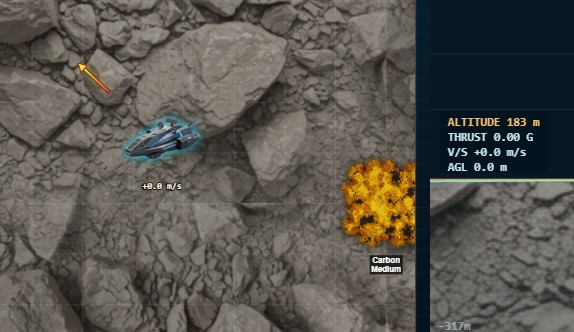
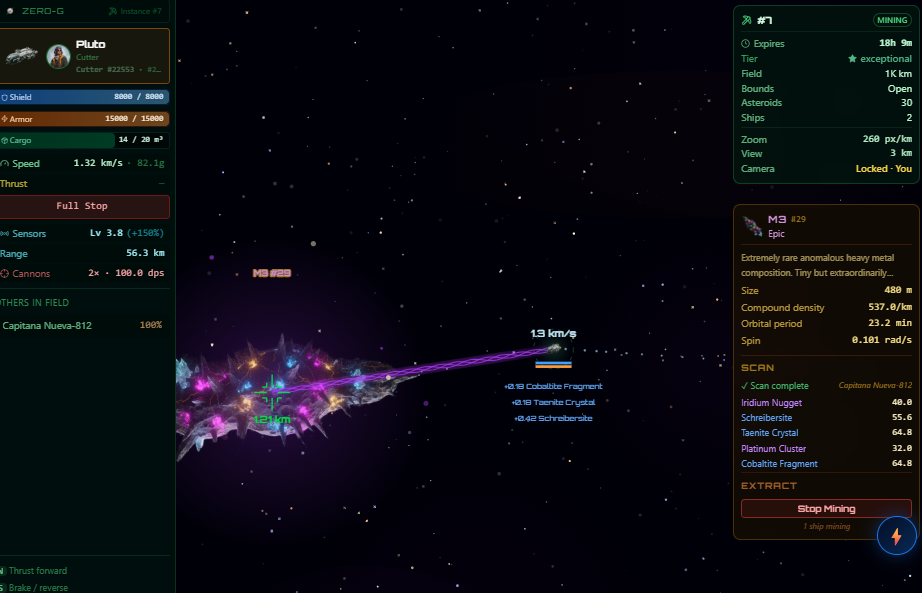
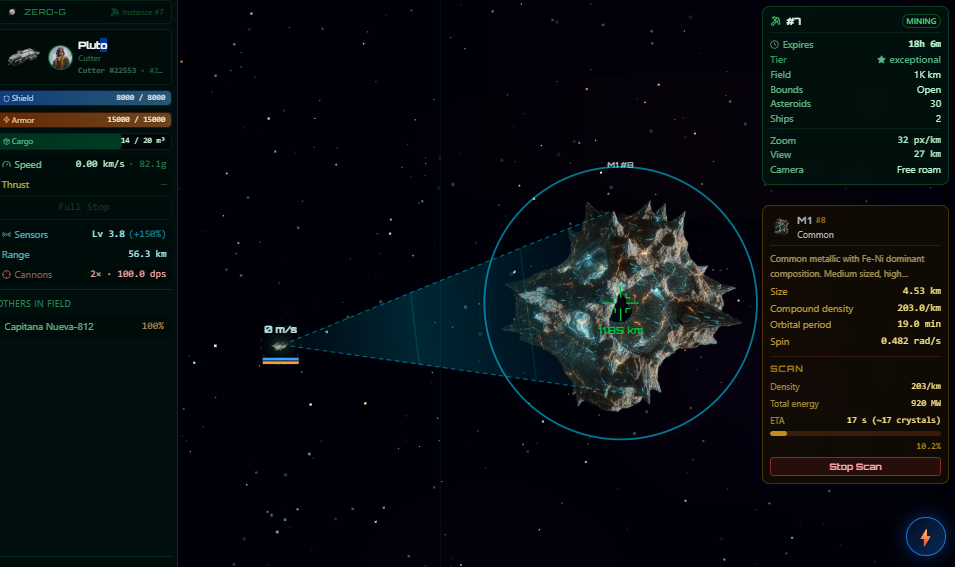
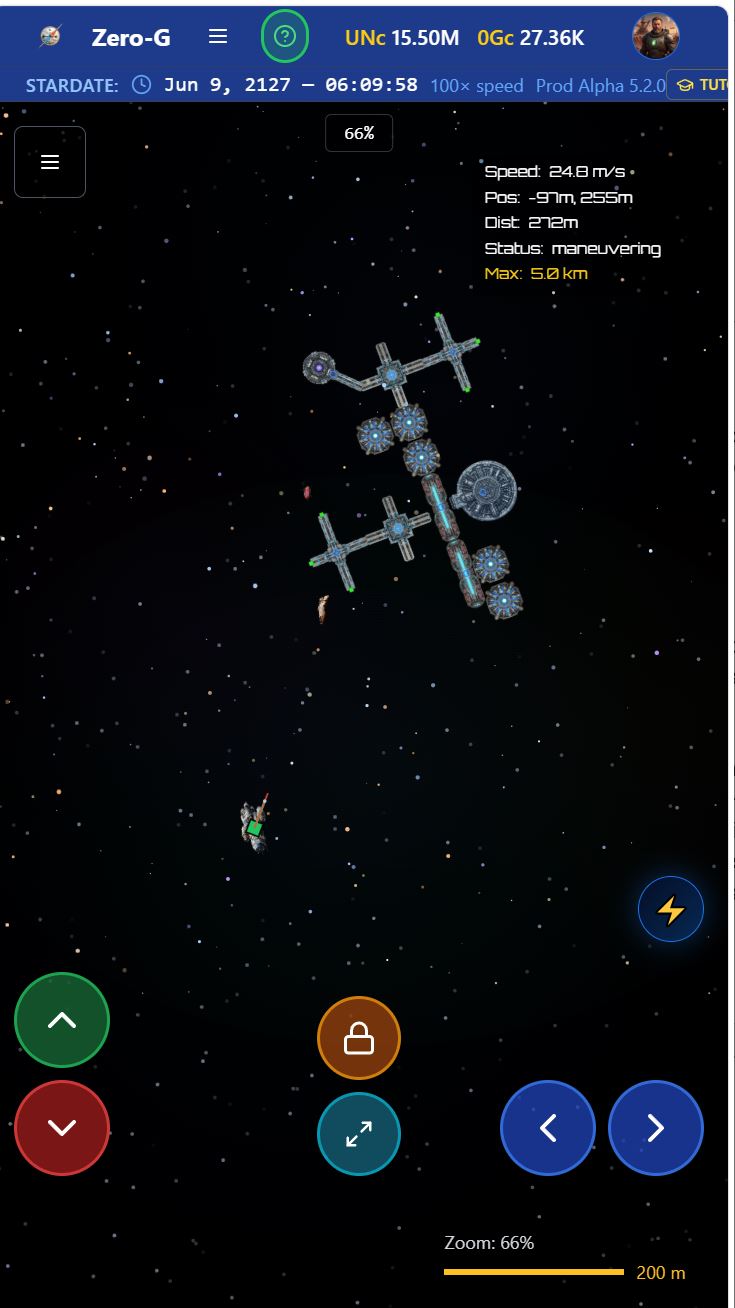
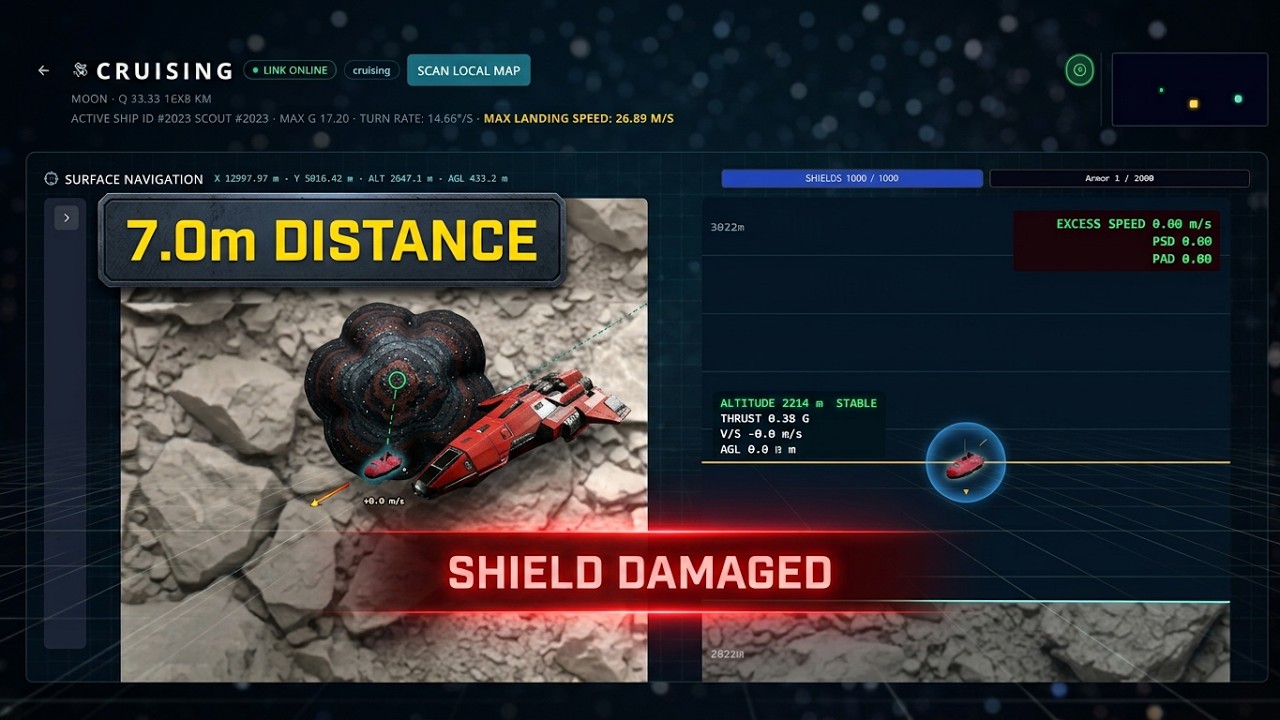
Newtonian physics with relativistic acceleration, manual controls and inertia. Asteroid mining means hand-flying through a field with live collision physics.
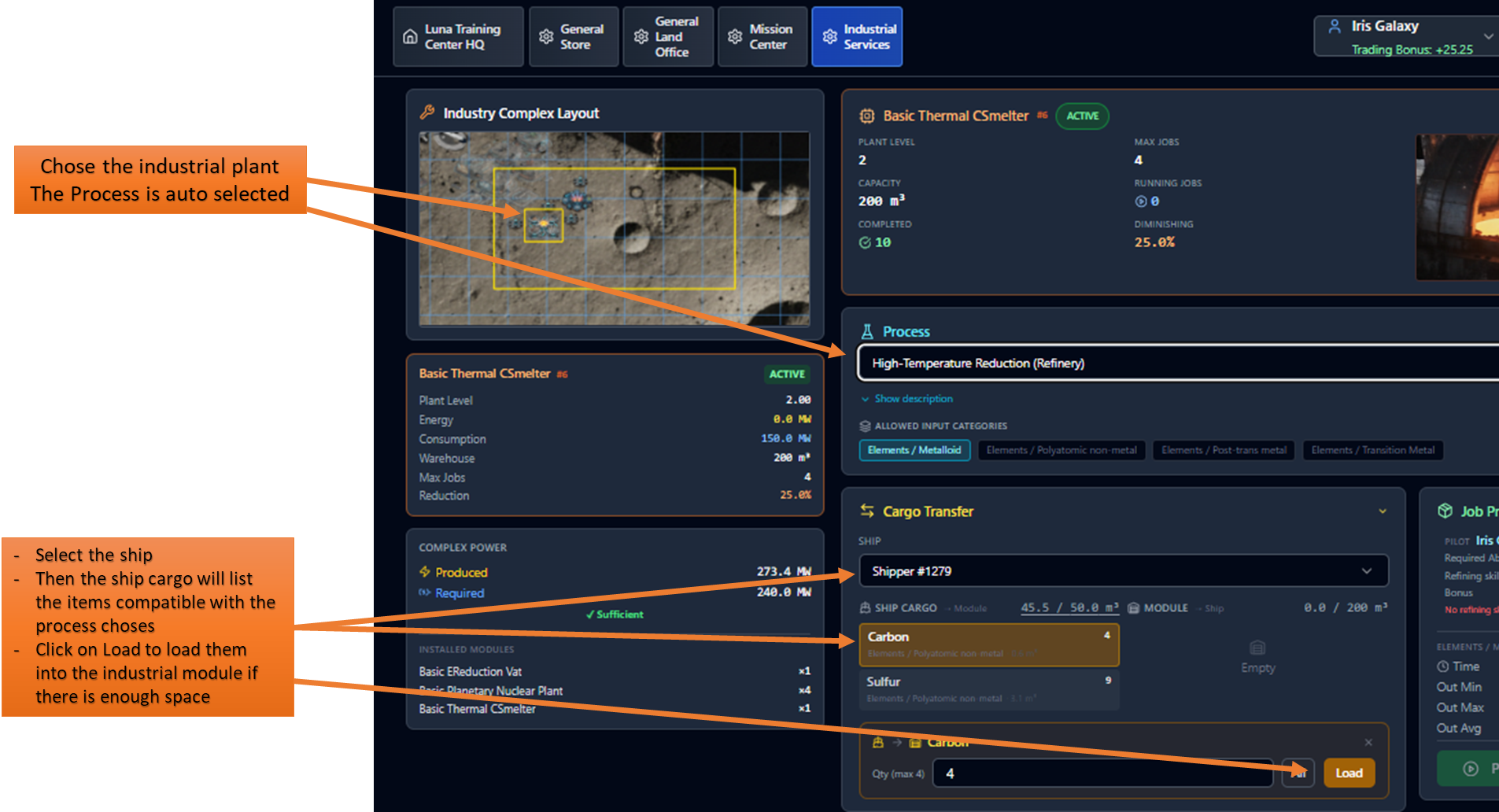
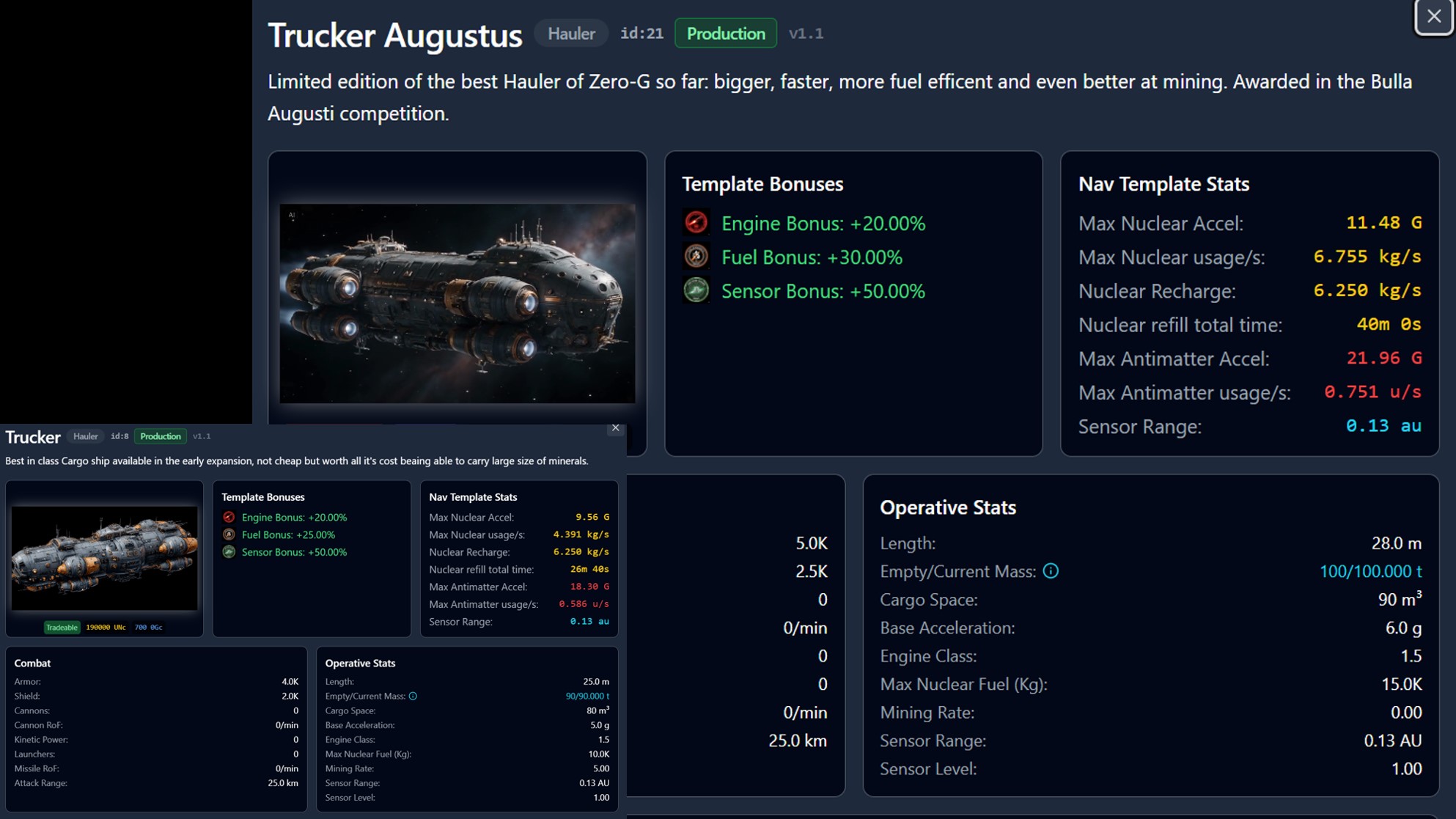
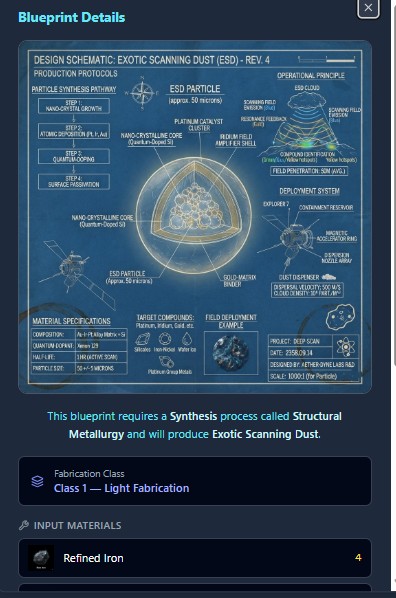
Mine raw elements, refine them through real chemistry, synthesize components. Every stage happens at a physical location you have to fly to. The chain closes at the end of Alpha 5 — up to whole starships and starbase modules.
A player-run Auction House where what a cargo is worth depends on where it is. Hauling is a profession, not a chore.
One persistent universe running 24/7. No seasons, no wipes, no fresh starts. Ships accumulate their own history, XP and modifications.
There is no PvP and there never has been. The enemy is the aliens. The economy rewards players who supply each other, and Ventures let pilots pool their work into shared starbases.
Relativistic effects are simulated, and the clock runs at 100× real time — so a crossing of the Solar System is a session, not a fortnight, without pretending physics away.
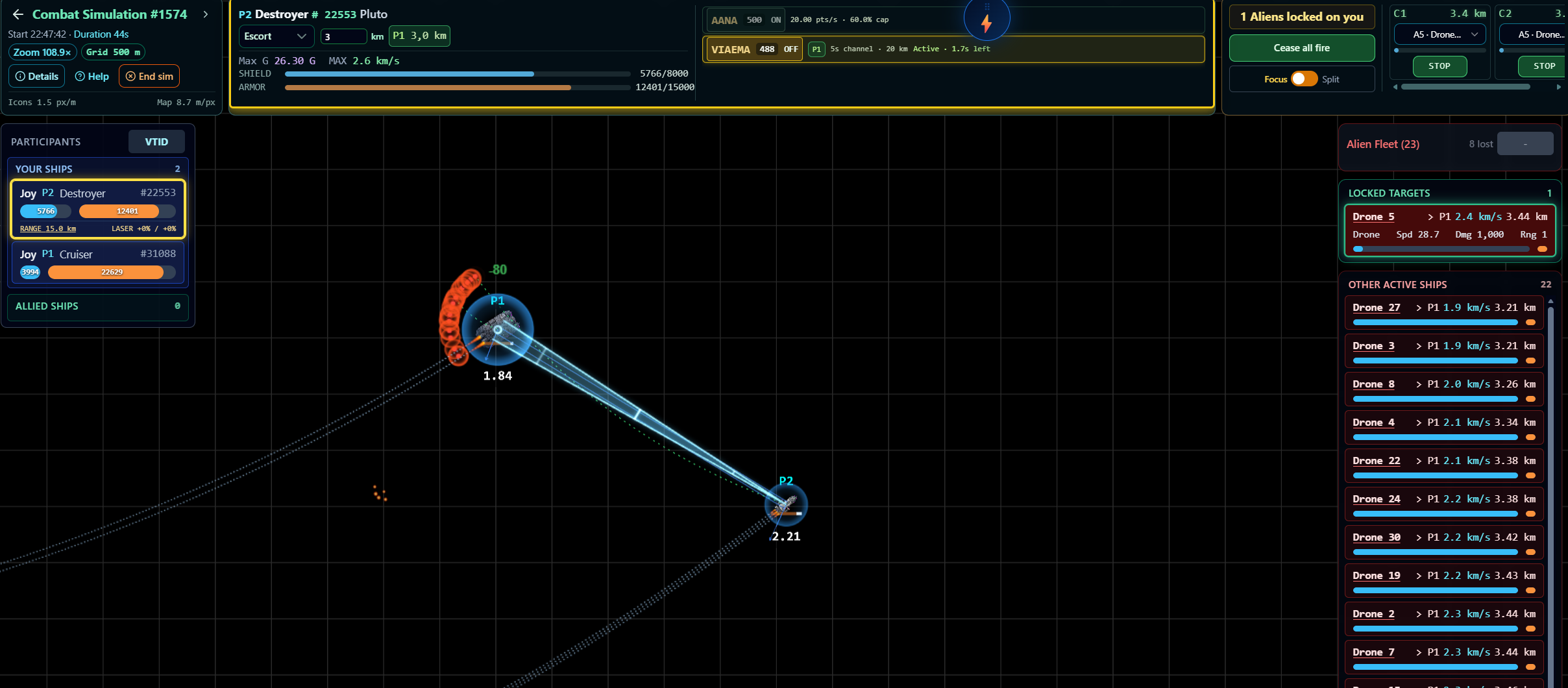
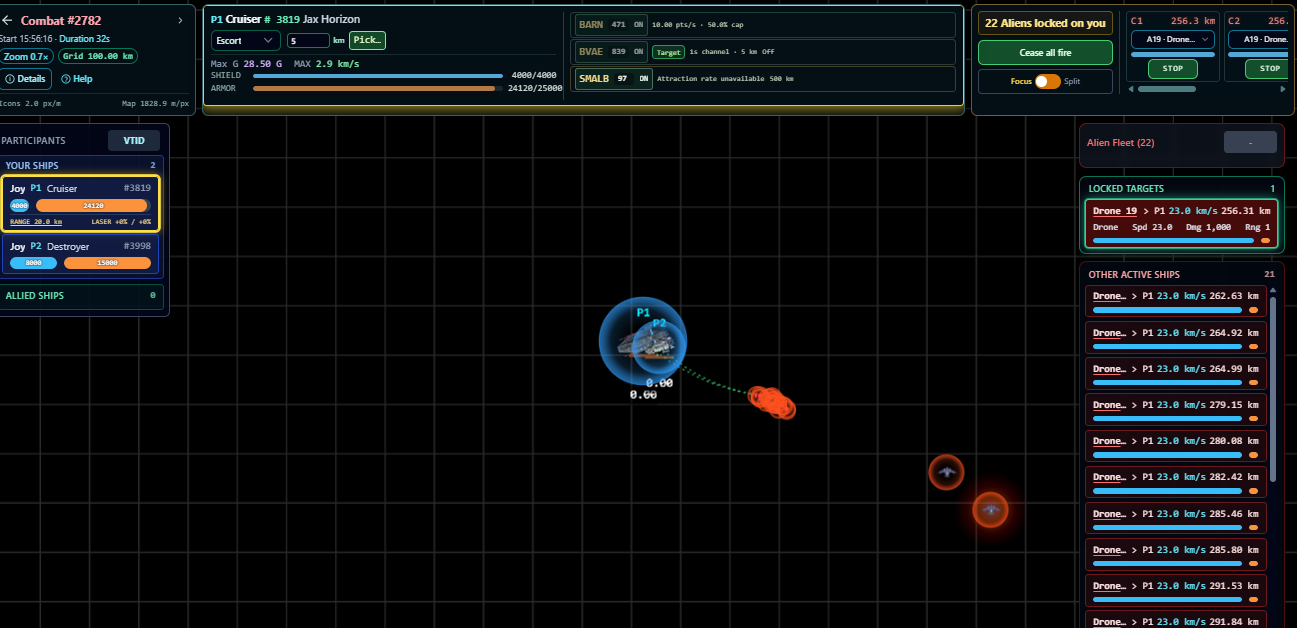
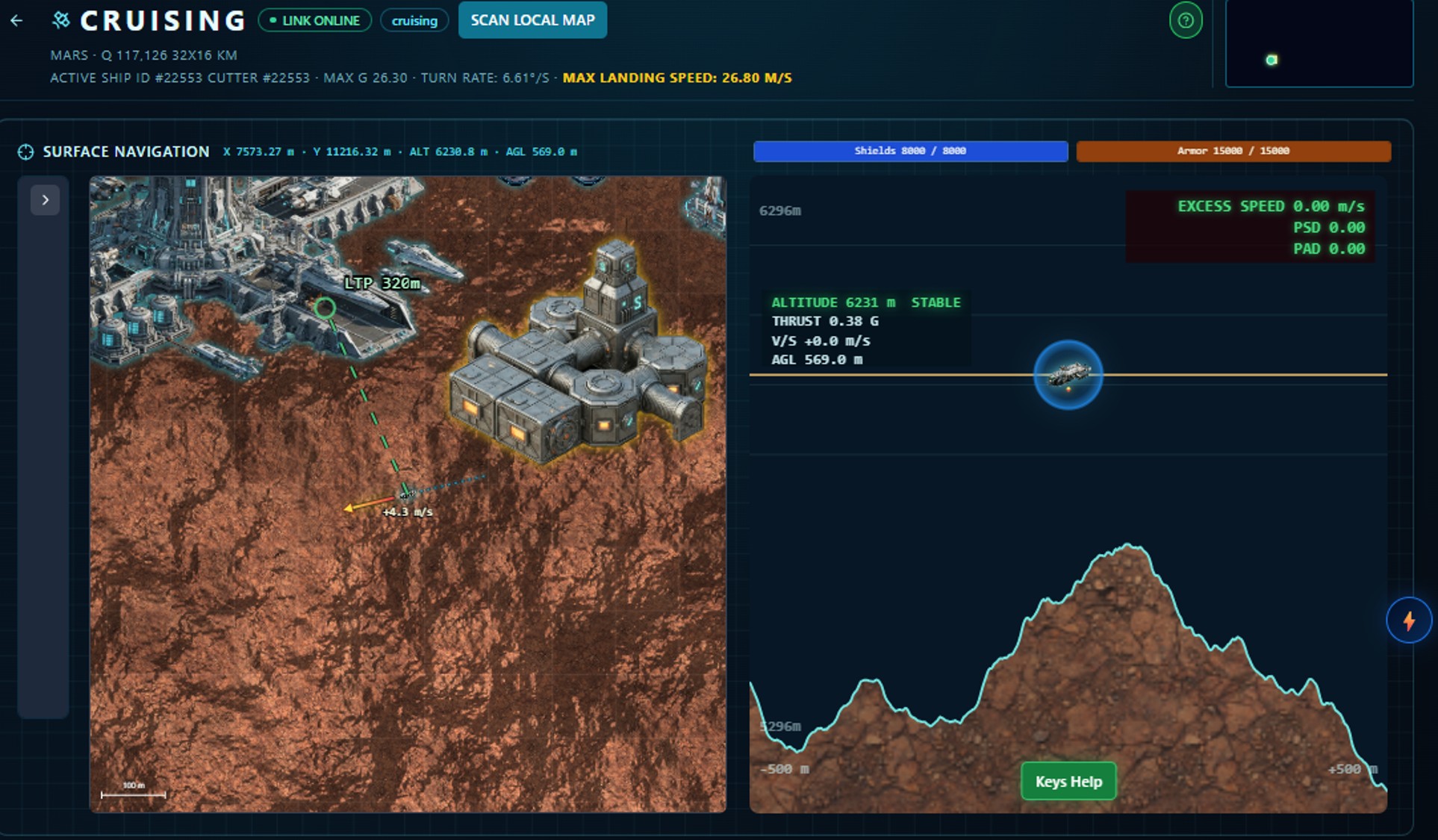
All images free to use in coverage of Zero-G. Right-click to save, or use the direct links.
Embeddable via YouTube. Free to use in coverage. The 5.4.5 walkthrough below is the most current footage of the game.
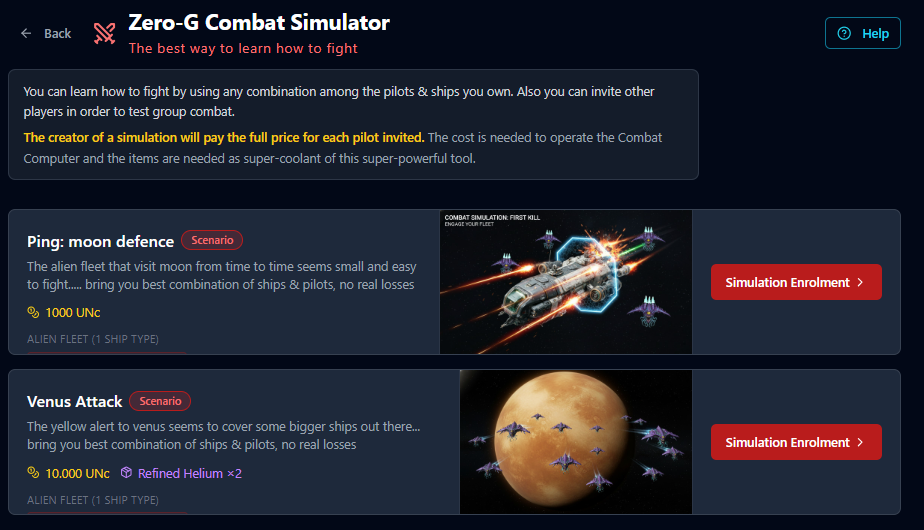
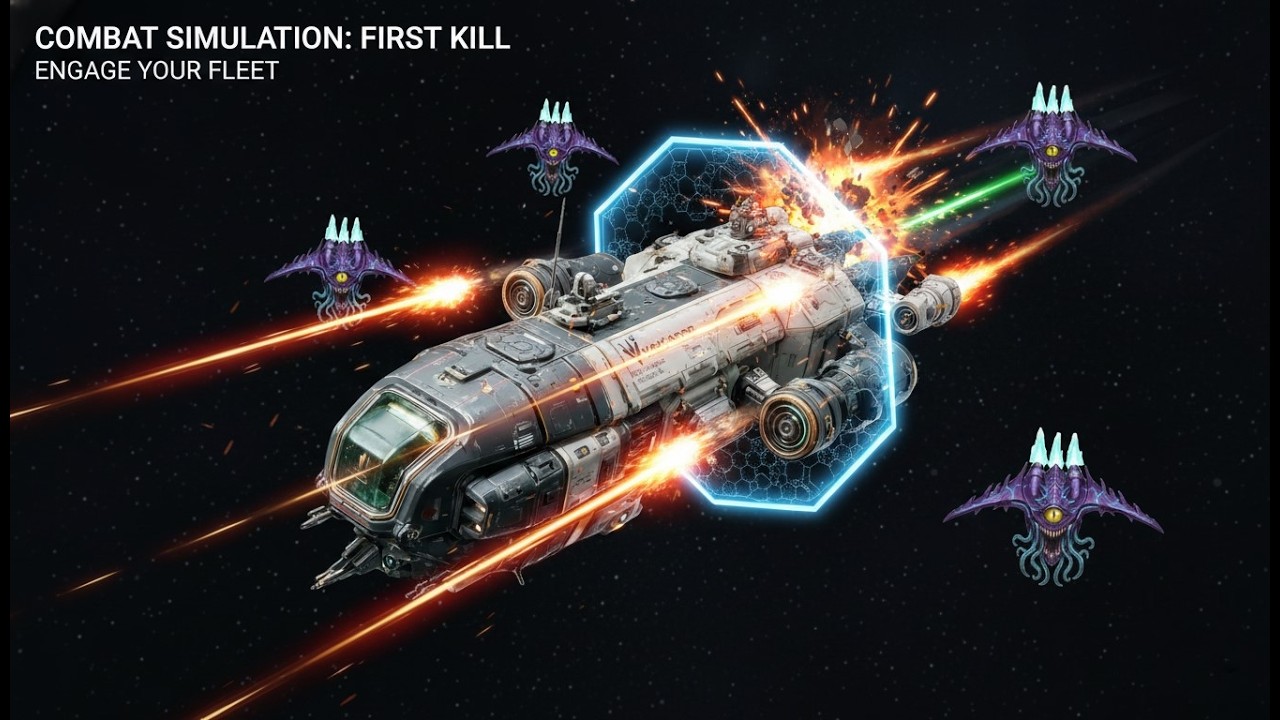
Advanced Combat — current trailerA Cutter rescues a frigate under alien fire, using Alien Beacons to pull the attackers onto itself and Armor Nanobots to repair mid-fight. Both are player-manufactured through Synthesis. (Alpha 5.4.1)
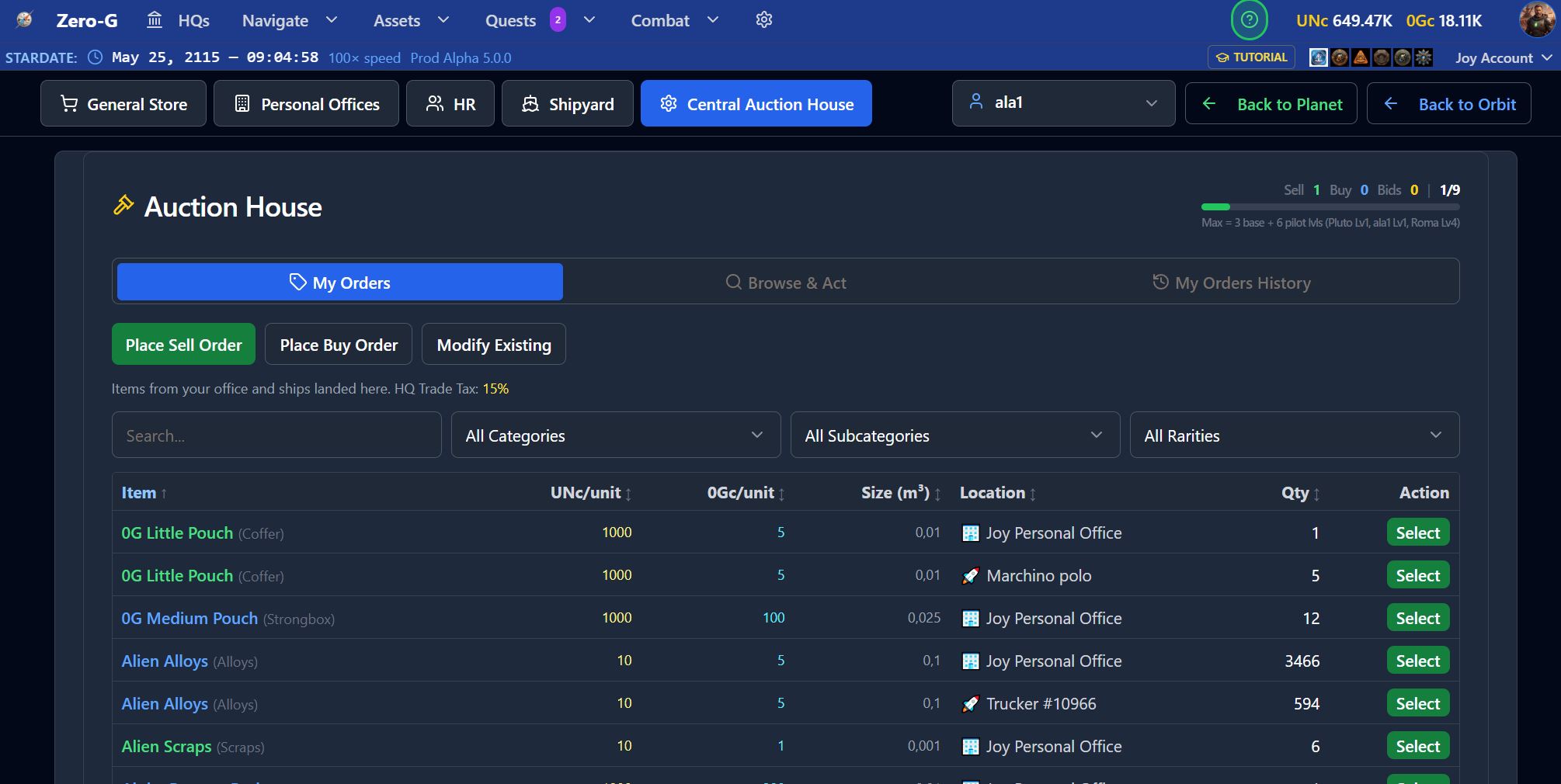
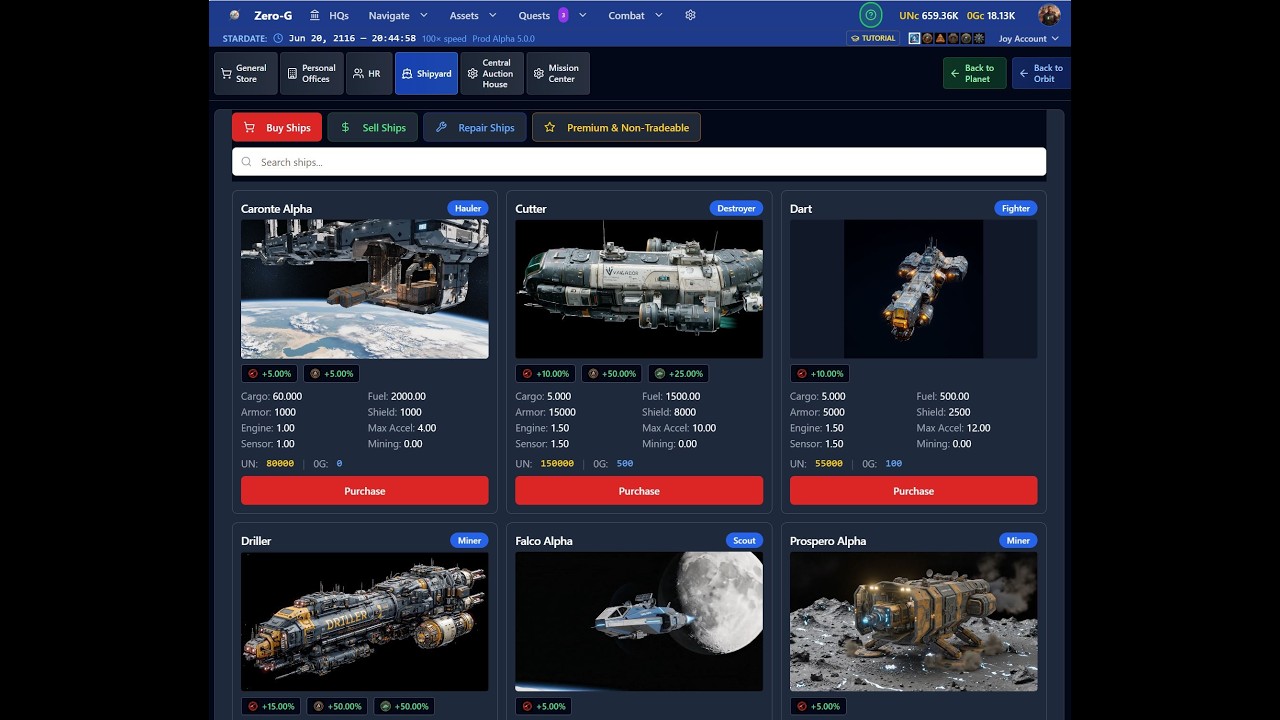
Alpha 5.0.0The Auction House opens and the economy begins
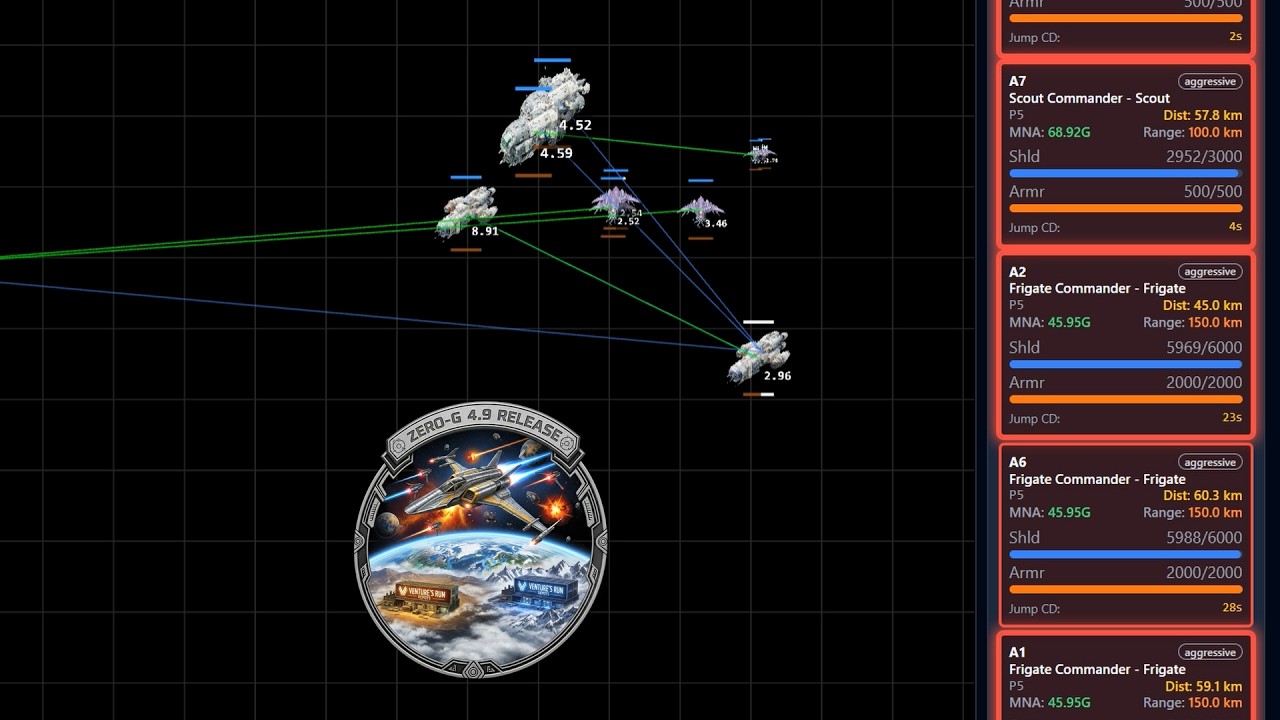
Alpha 4.9.0The Vespucci Expedition era
A Persistent Universe In Your Browser TabOriginal public alpha trailer — archive, January 2026 (Alpha 4)
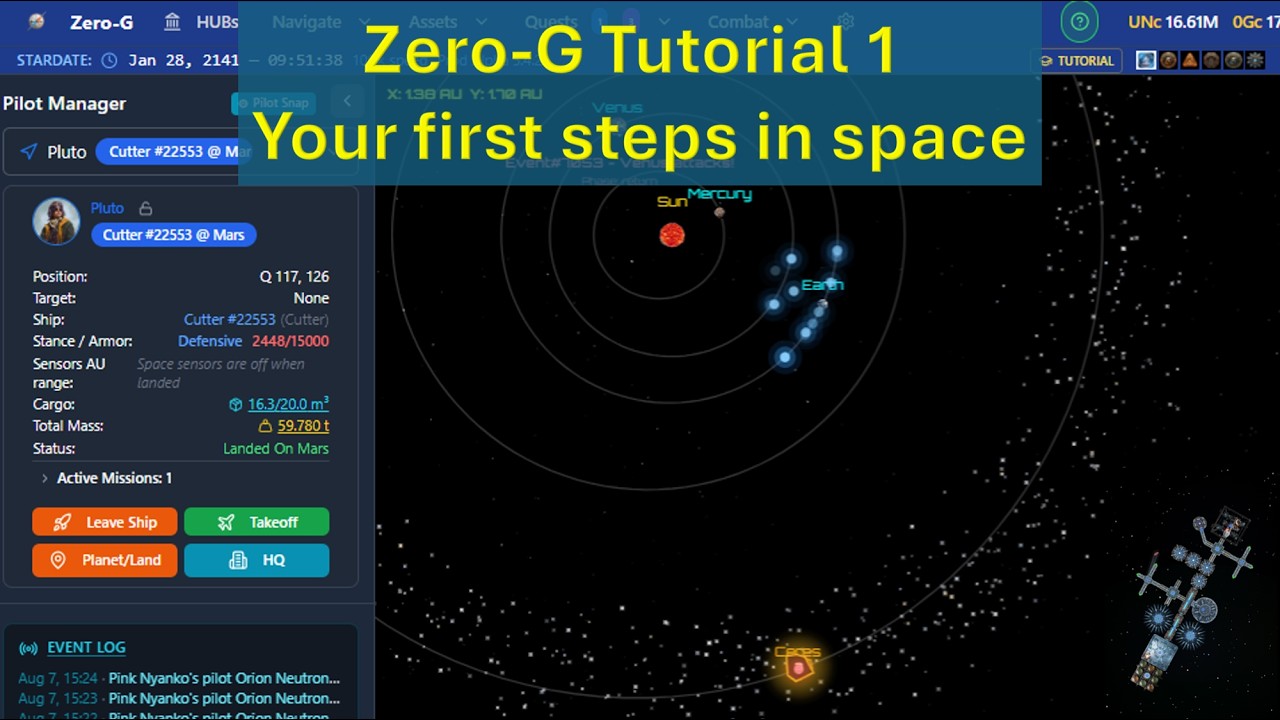
First flightGetting off the ground
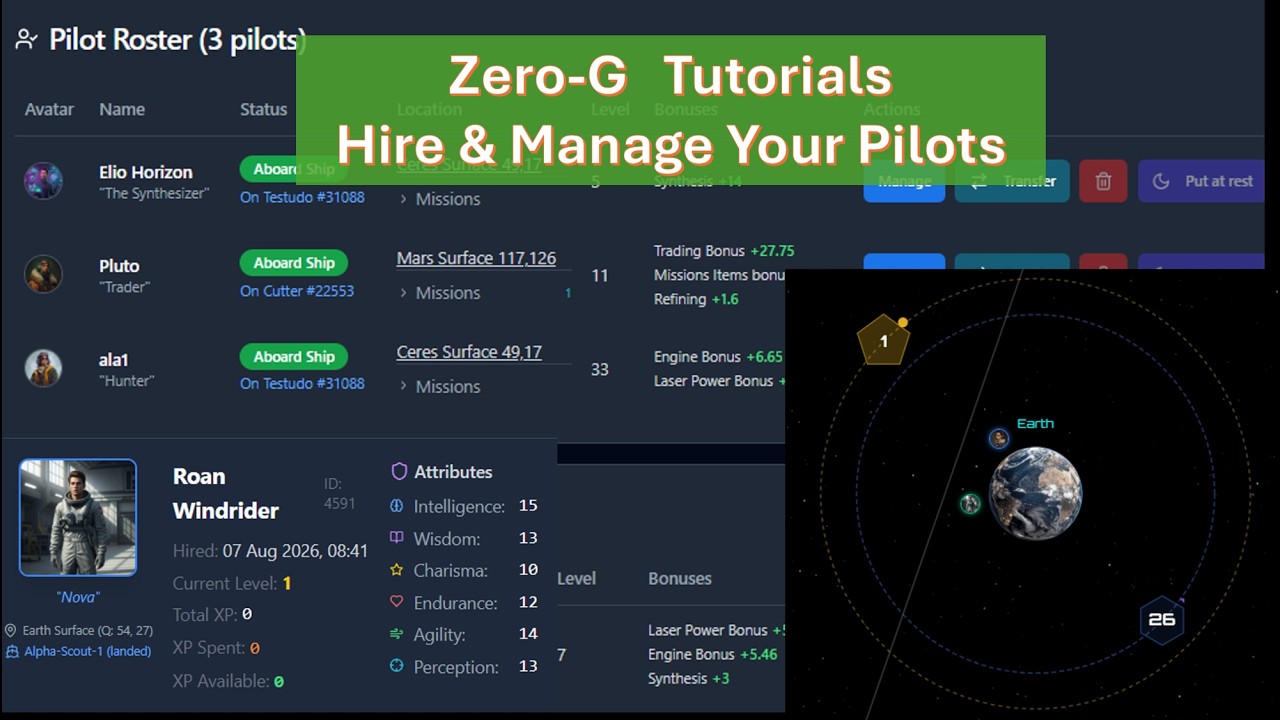
PilotsHiring, training and specialisation
HQ & personal officeYour base of operations
MissionsFaction work and reputation
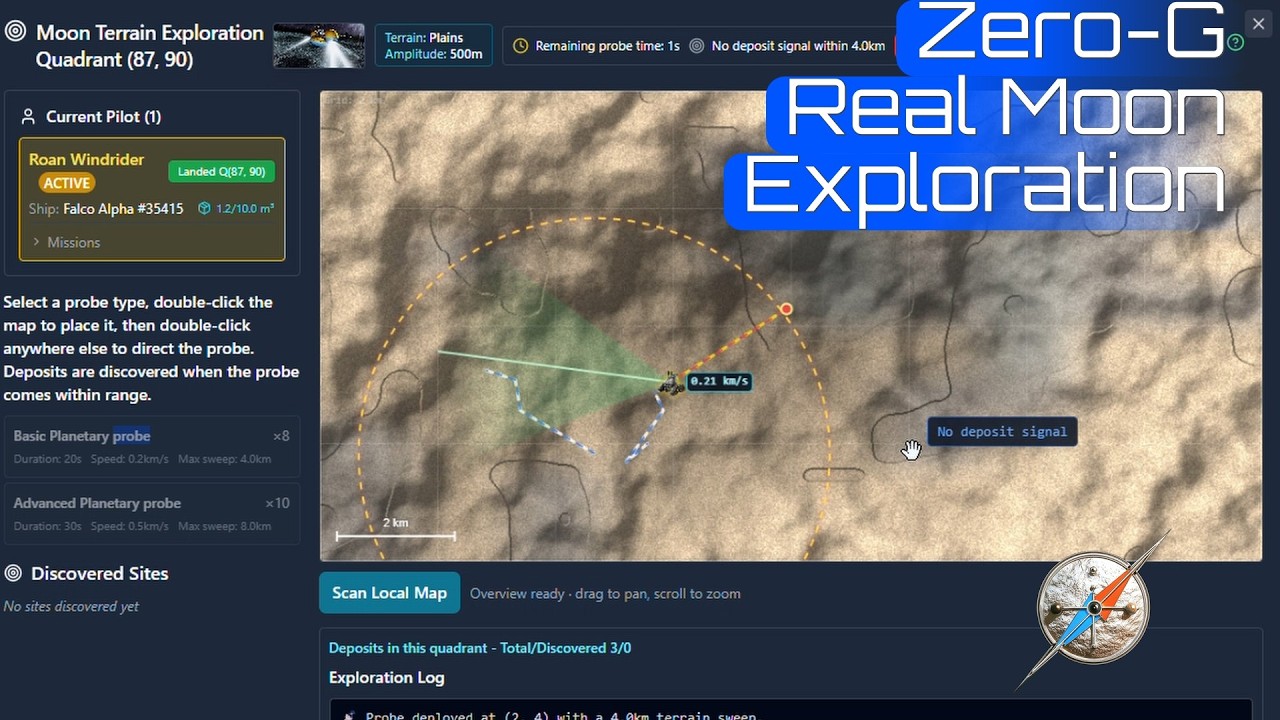
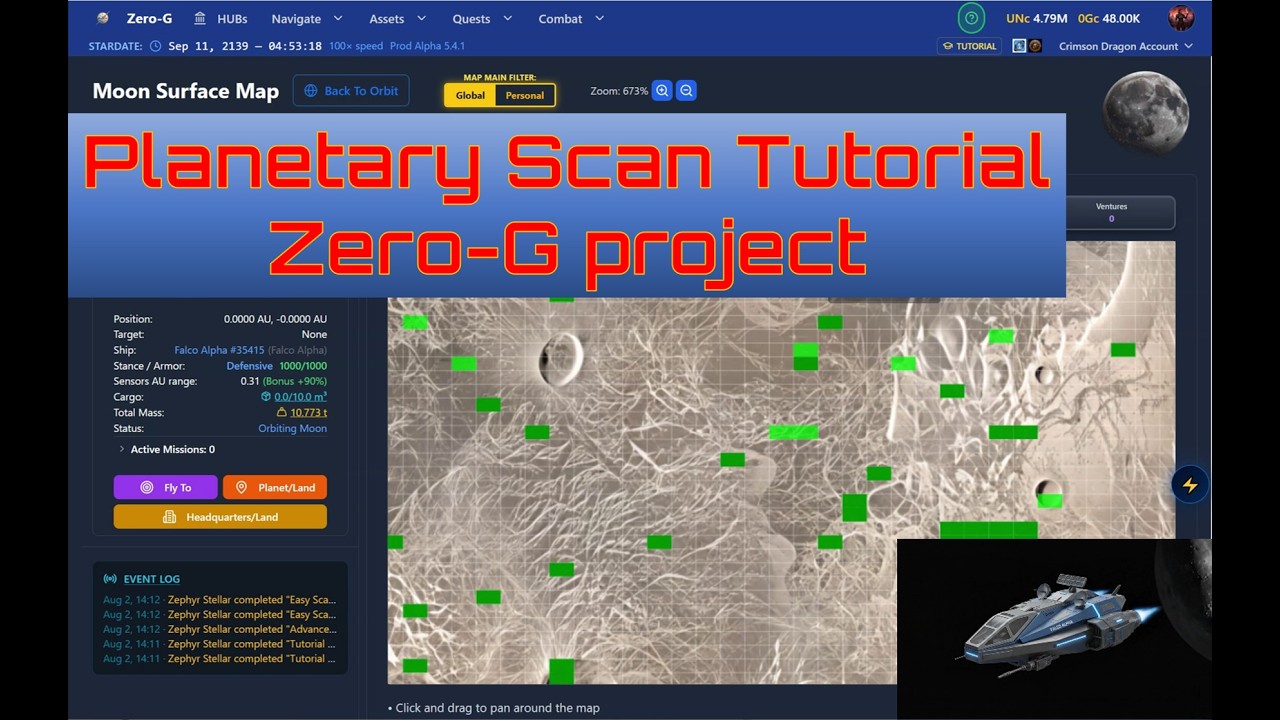
ScanningFinding what is worth mining
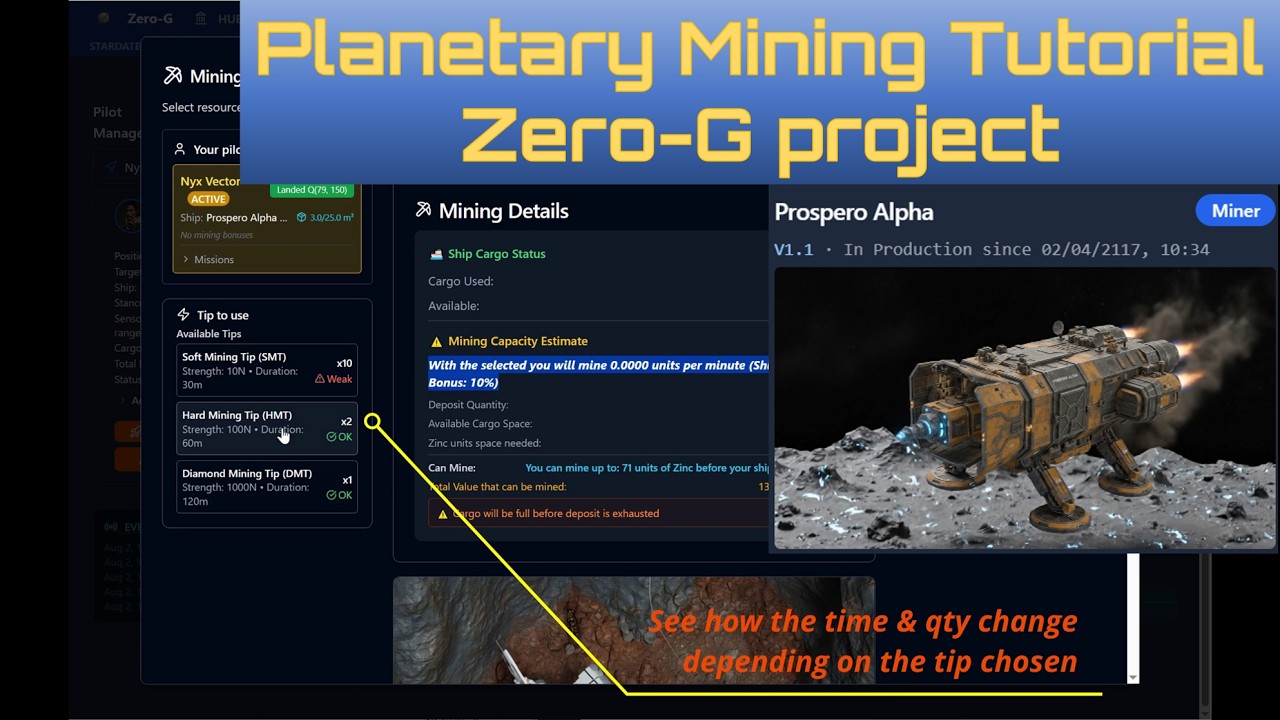
MiningExtraction, tools and yield
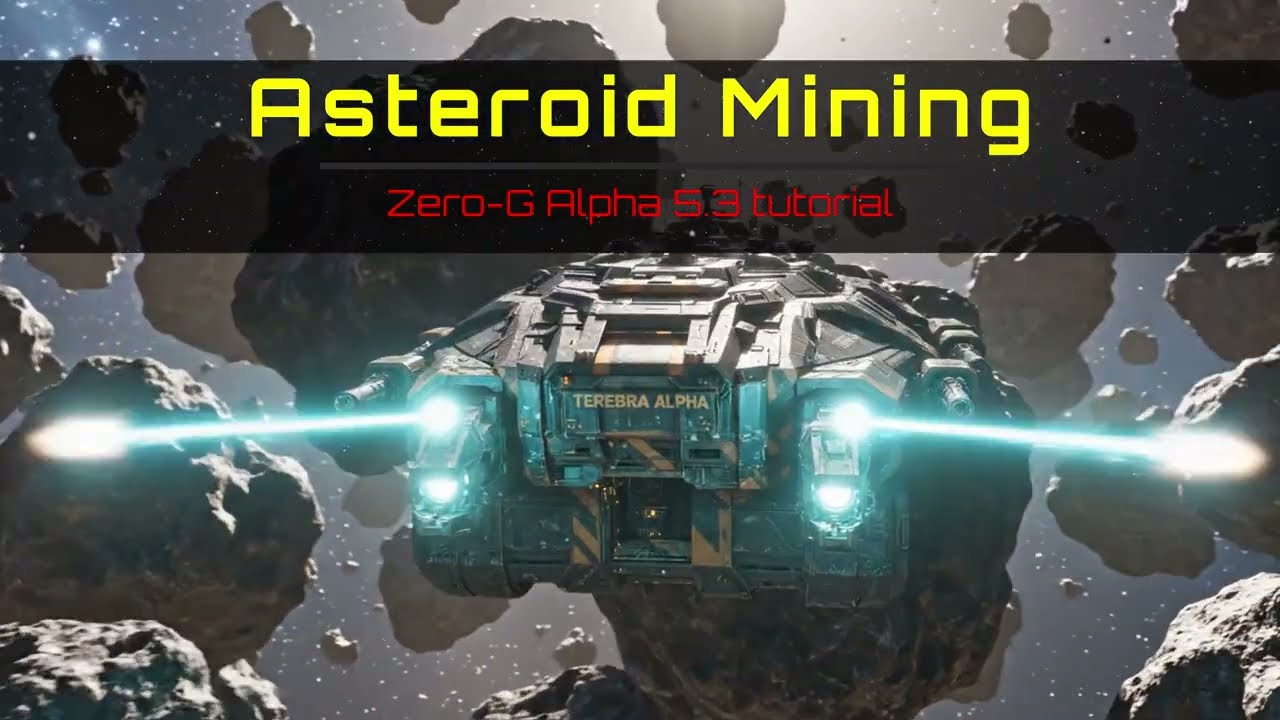
The Asteroid BeltAlpha 5.3 — the first active instance
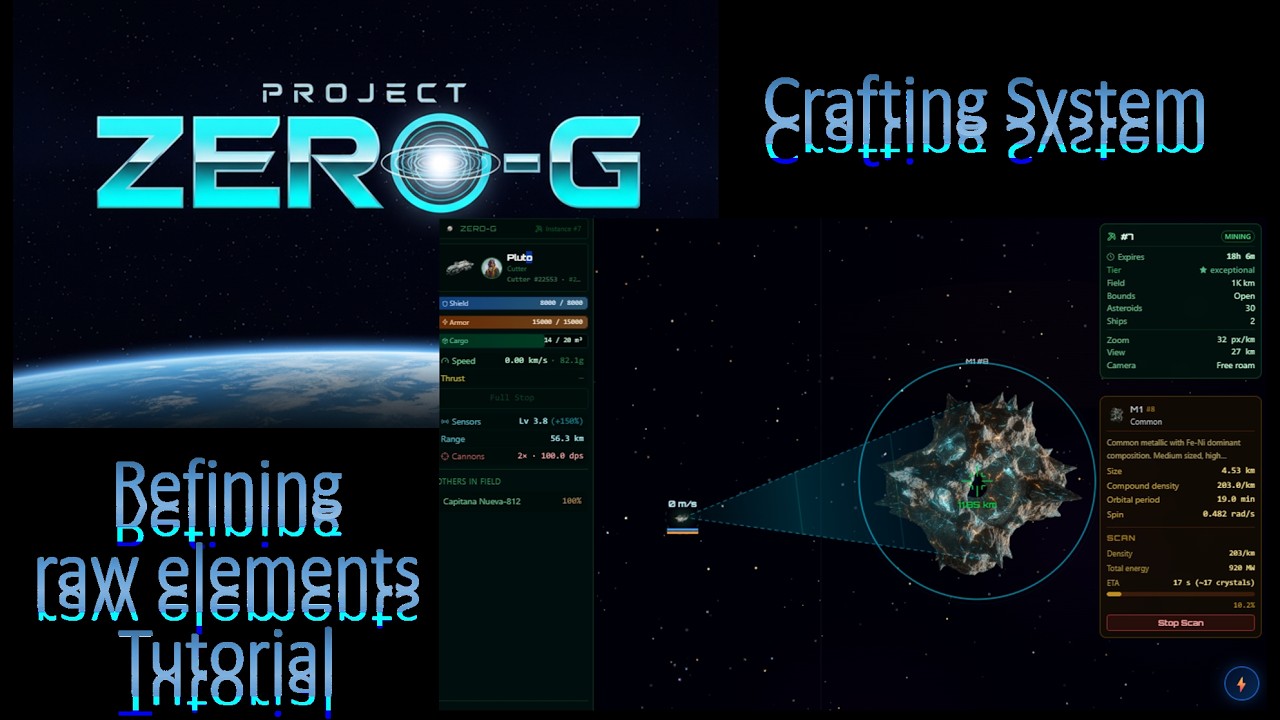
RefiningAlpha 5.4 — ore into elements
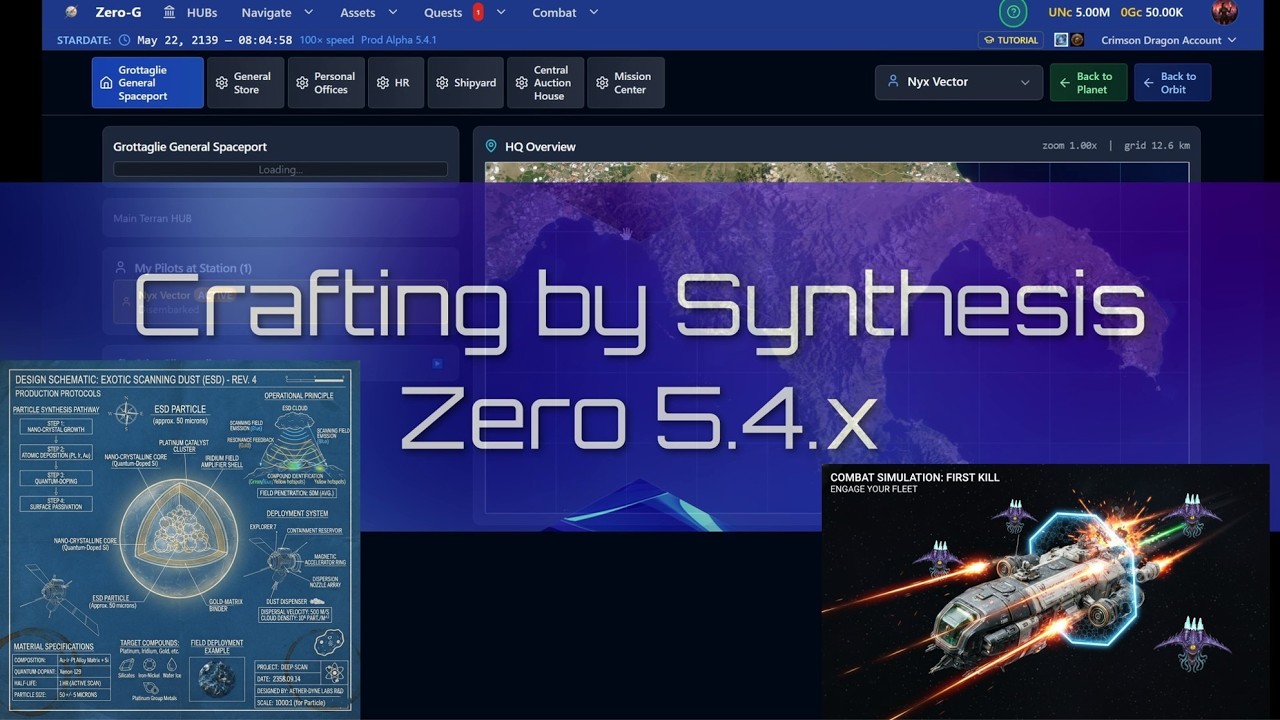
SynthesisAlpha 5.4.1 — elements into equipment
Commander systemDirecting your fleet
"Project Zero-G is a sci-fi browser MMO that uses real-world NASA data to build its space sim world"
Chris Neal — Massively Overpowered, January 2026
Zero-G is built by three Italian engineers, part-time. It began as a reaction to space sims that demand a 100 GB install before you can see a planet — the goal was a real, physically simulated Solar System you could reach by opening a browser tab.
The project is led by Giuseppe Caggese. There is no publisher and no external funding.
On how the game looks, in Giuseppe's words:
We are very old school devs, and this is our legacy project so we are putting all our design efforts and resource in it and we privilege depth, realism and mechanics. In old school games graphics was really second or third priority, I still remember when I finished the Ultima III chapter of the saga where my character was like a "@" but I was so happy and satisfied.
Giuseppe Caggese
In practice that means most of the art in the game is currently AI-assisted. That is a temporary arrangement, and the team says so openly: it lasts until the project can afford to pay artists. All revenue from in-game purchases goes into development speed.
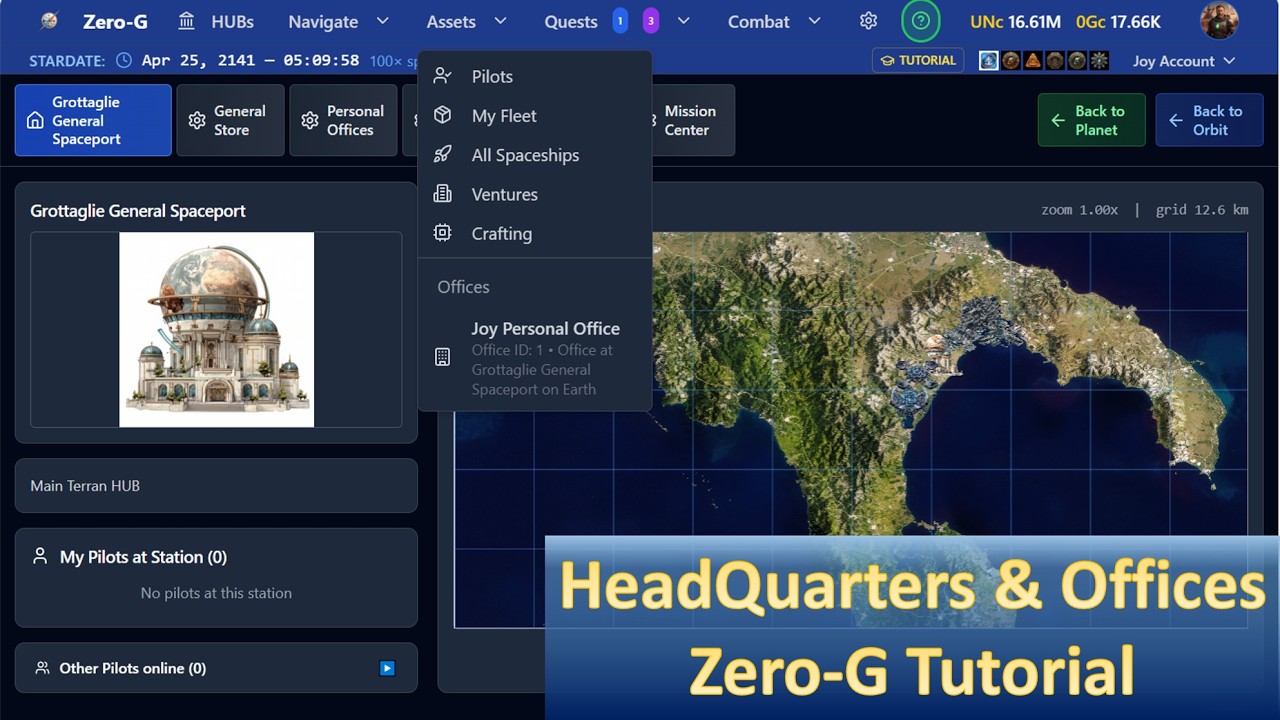
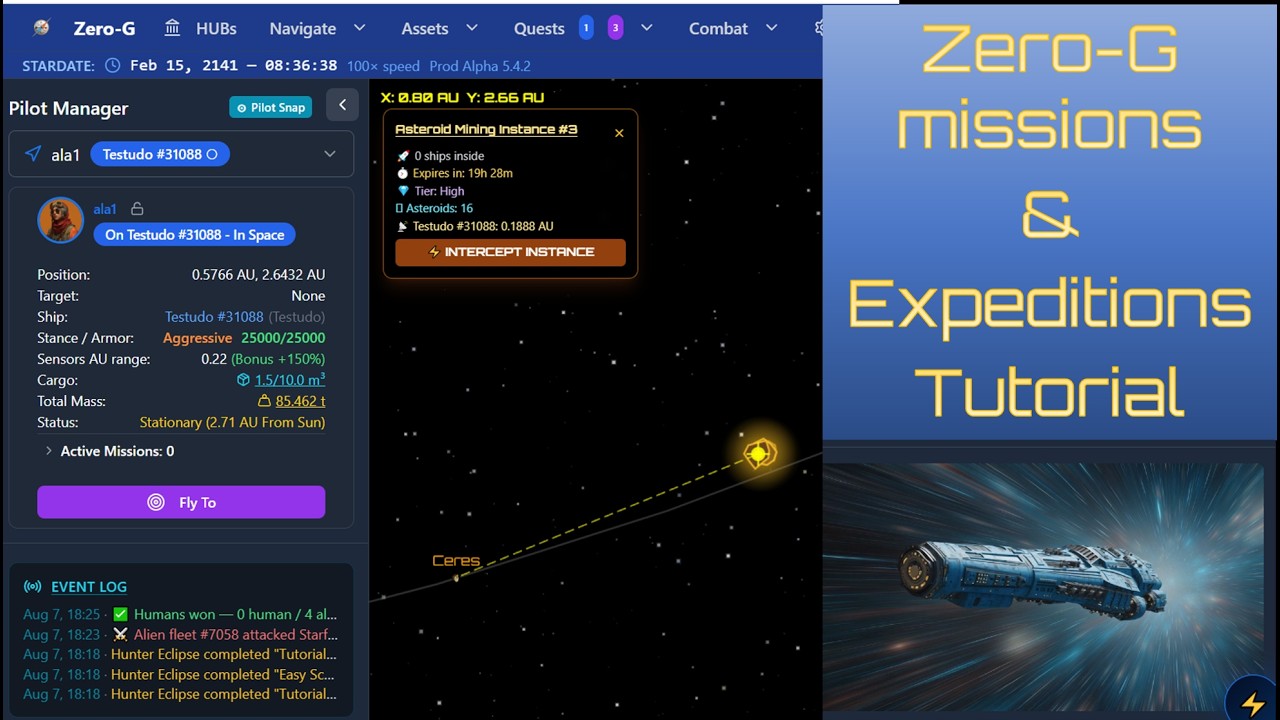
"Still 3 old Italian engineers, still part-time, still running on passion and coffee."
Everything on this page — text, screenshots and video — may be used freely in coverage of Zero-G. Interviews and gameplay walkthroughs are available on request. There is no review key to issue: anyone can start playing immediately.