Pilots,
For most of this year the planets have been places you fly to. We are building the thing that makes them places you live on.
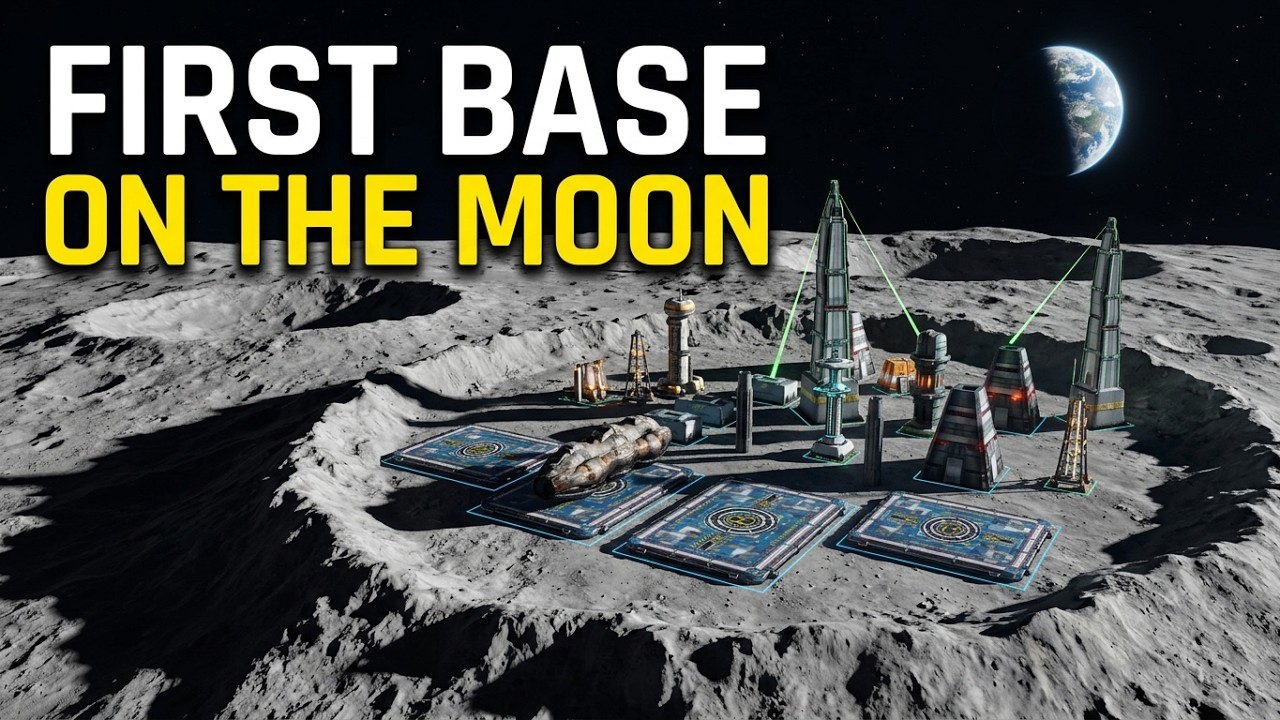
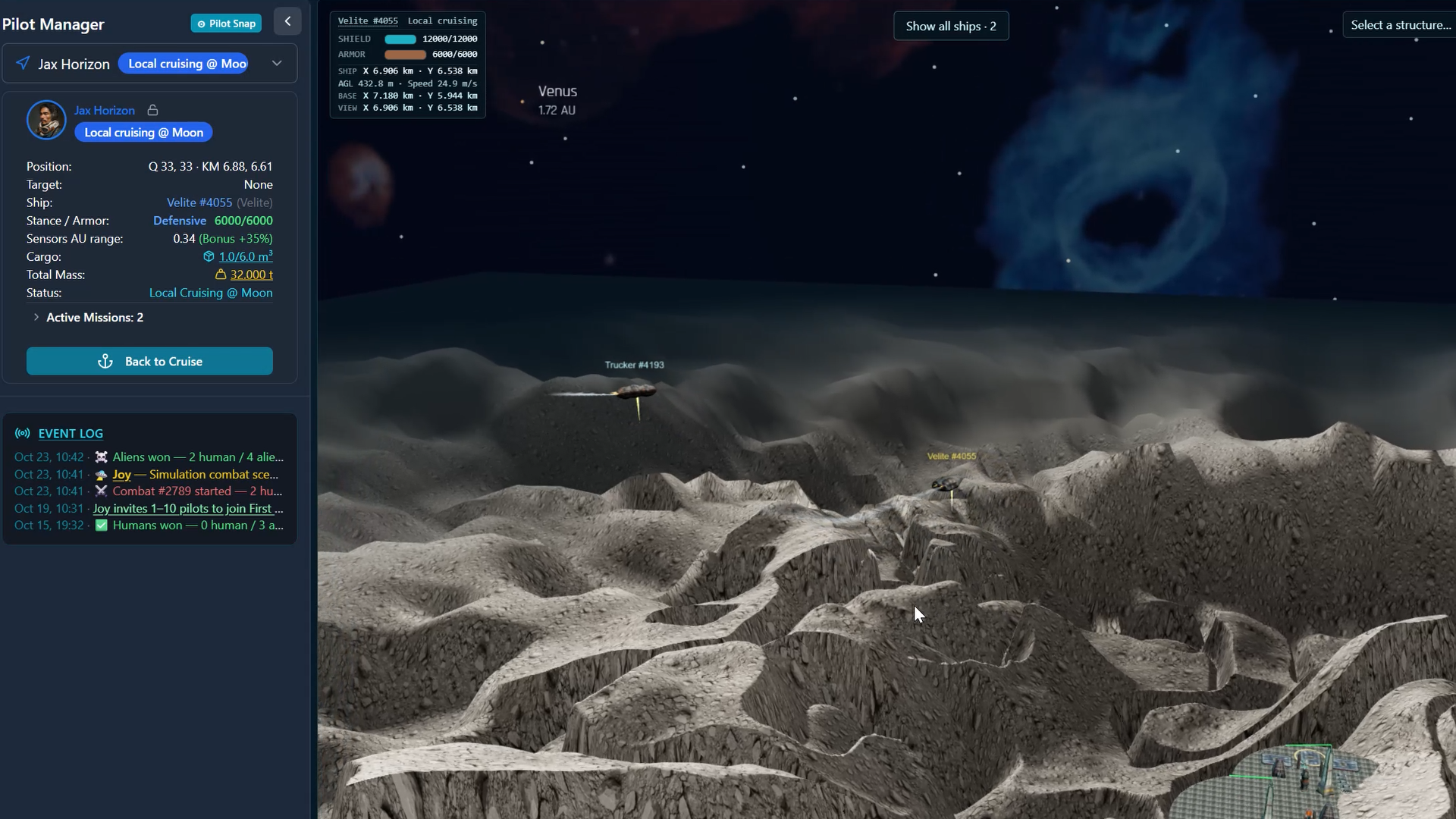
Planetary bases arrive with Alpha 5.7, early November. This is a preview of how they work — close enough now that we would rather show you than tell you about it.
Watch two ships land at a Moon base (3 min)
How you get land
You buy a Land Licence from a General Land Office. There are two so far: one at the Moon HQ, one at Ceres Ophir Port.
You can only buy land in a quadrant that has been
published — and a quadrant is published because a pilot fully scanned it and sold the data to a land office. The richer the ground, the better that pilot is paid for it.
So every piece of land anyone can ever buy exists because somebody surveyed it first, and decided to make it public instead of keeping it quiet and mining it themselves.
Mars alone has 44,944 quadrants. 128 of them have been fully scanned.
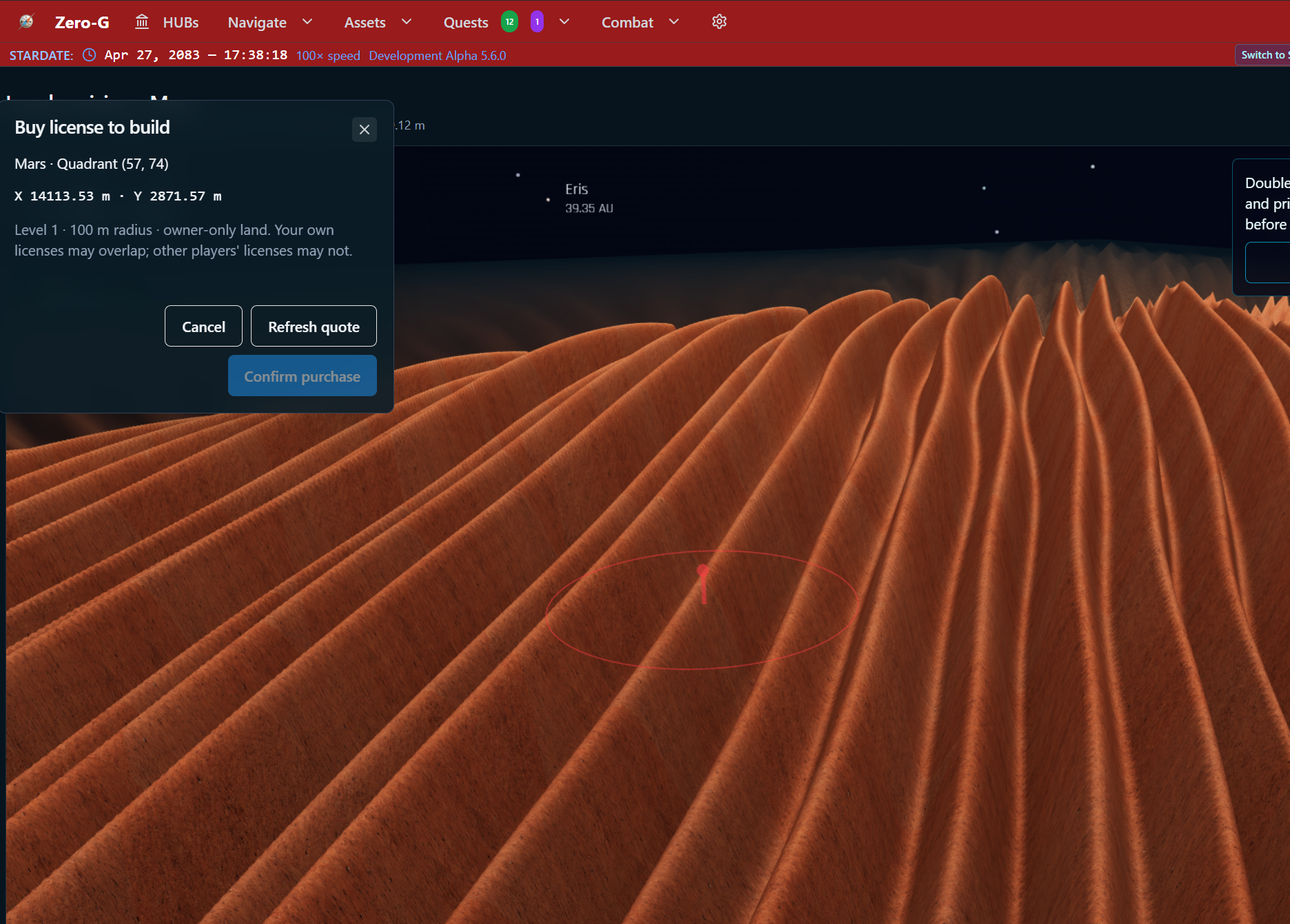
When you buy, you open the planet in 3D, look at the published ground, and click the spot you want. Not a slot on a list — the actual terrain, at the actual coordinates. The licence grants you a circle
100 metres across, registered in your name.
Each further licence on the same planet costs double the last one. Nobody is buying a planet.
Your own licences may overlap each other. Another player's may not overlap yours. So a base grows by buying the ground next to the ground you already have — and the land beside you stays yours to claim.
The ground decides what it costs
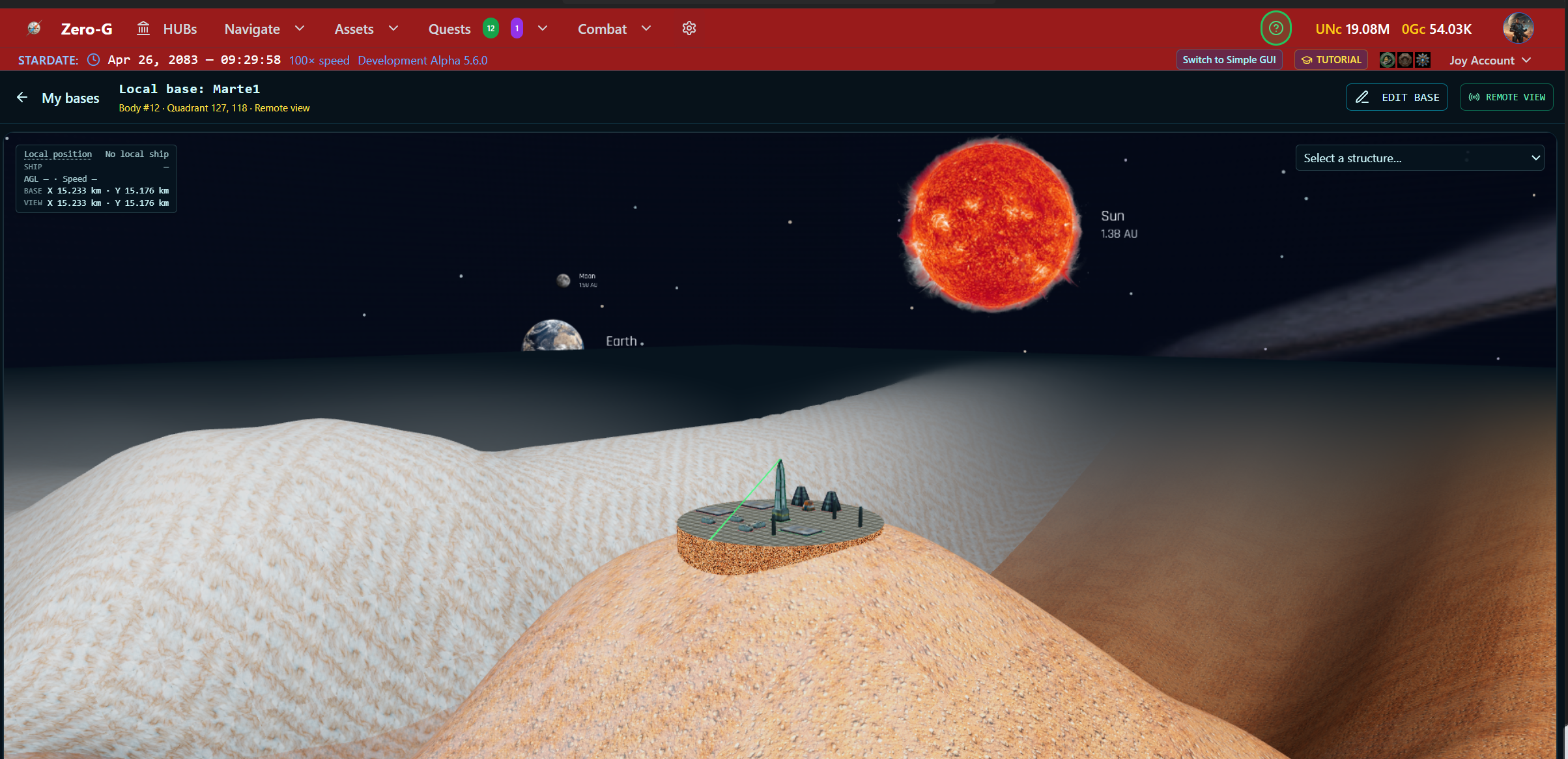
Your first structure is the
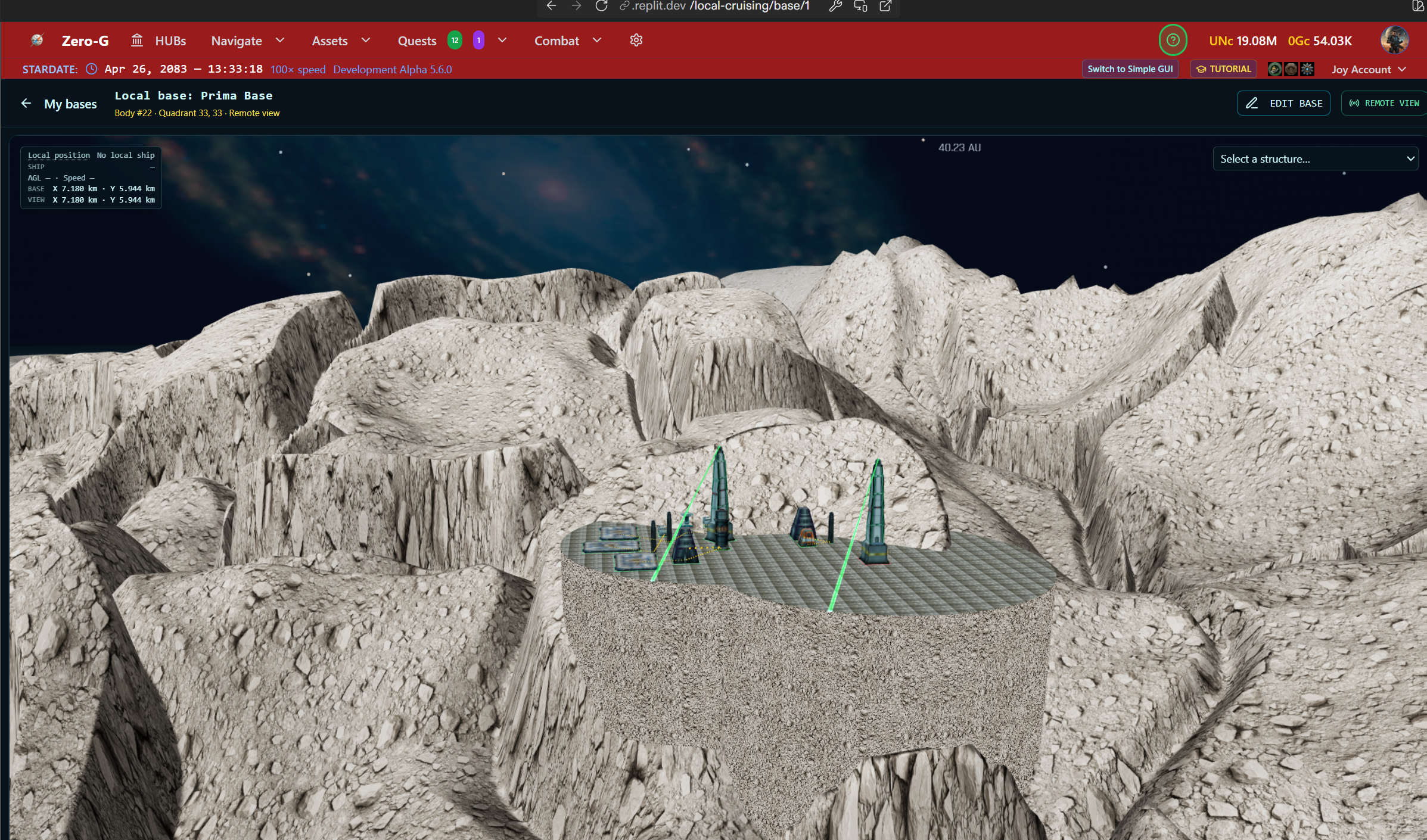
Pharus, the beacon that marks the claim. Deploy it and it lays a platform across your hundred metres — filling in everything below it, and letting whatever is higher stand through it.
Which means the terrain you chose sends you the invoice.
A flat plateau is cheap. A crater rim, a ledge on a mountainside, the floor of a deep valley — those are spectacular, and you pay for every cubic metre of fill underneath them. In our test builds the ground costs many times more than the platform laid on top of it.
The view out of your habitat window is a line item.
You also choose what the floor is made of. Cheaper surfaces cost less today and wear faster; better ones hold up, and cost less to maintain and to rewire later.
What a base actually does for you
Three things, out of what is working so far.
A
Horreus is a warehouse where you are already working, so the ore does not have to go home before it counts for anything.
A
Domus is a habitat. Your pilots live there, with the personal office services they would otherwise fly back to an HQ for.
A
Semita beacon lets a ship in orbit drop straight into the landing approach around your base, without cruising there first. If you have flown the same descent forty times, that one is for you.
A
Fornax reactor powers all of it — and the power has to physically reach each building. That has turned into a problem of its own, with a cost per metre and a penalty for changing your mind. We will show you that one next time.
Where would you put yours
If you could claim a hundred metres anywhere in the Solar System — which body, and what would you build first?
Some of what you tell us will end up in what gets built.
See you out there,
The Zero-G team, Rome
Play Zero-G
FLY FAST PILOTS!
👾Discord
📰 Press kit